
coconut shell activated carbon specifications
Quick Answer for Procurement & Engineering: > Coconut shell activated carbon is a highly porous, clean-burning adsorbent characterized by a dense network of micropores (< 2 nm), making it highly effective for adsorbing trace organic compounds, volatile organic chemicals (VOCs), and free chlorine. To ensure optimal filtration performance, procurement teams must evaluate key metrics such as iodine value (typically 950 to 1150+ mg/g), CTC adsorption, ash content, and particle mesh size. For raw material procurement, sourcing from certified global suppliers is critical to ensuring compliance with environmental and drinking water standards. Coconut Shell Activated Carbon – High-Purity Adsorbent | Water & Air Purification Grade – Moon Bright Resources
Table of Contents
- #introduction – Introduction and the Science of Microporosity
- #performance-metrics – Key Performance Metrics for Activated Carbon Procurement
- #comparison – Material Comparison: Coconut Shell vs. Coal vs. Wood-Based
- #mesh-sizing – Granular Activated Carbon Mesh Sizing and Pressure Dynamics
- #compliance – B2B Compliance, Logistics, and Bulk Storage Guidelines
- #faqs – Frequently Asked Questions (FAQ)
1. Introduction and the Science of Microporosity
In the landscape of modern industrial water purification and municipal air filtration, identifying the correct media is critical to plant efficiency and regulatory compliance. Granular activated carbon (GAC) is the industry standard for liquid and vapor-phase adsorption, but not all carbon substrates are engineered equal. The raw material used to manufacture activated carbon determines its internal pore structure, which in turn dictates its performance profile.
The Adsorption Mechanism
To understand why coconut shell carbon is highly valued for high-purity applications, we must look at how adsorption works at a molecular level. Unlike absorption, where a substance is fully dissolved or absorbed into a liquid or solid, adsorption is a surface phenomenon. Dissolved contaminants or gas-phase molecules are captured and bound to the internal surface area of the carbon pores via weak Van der Waals forces.
The effectiveness of this process relies entirely on the internal surface area available. A single gram of high-quality activated carbon can exhibit an internal surface area exceeding $1000 \text{ m}^2$. However, the accessibility of this surface area is determined by the classification of its pores:
- Micropores (diameter < 2 nm): Ideal for capturing small molecules, gaseous VOCs, and chlorinated compounds.
- Mesopores (diameter between 2 and 50 nm): Best suited for medium-sized organic molecules, color-causing compounds, and humic acids.
- Macropores (diameter > 50 nm): Act as entry channels or “highways” allowing transport into the inner pore structure, though they provide minimal surface area for actual adsorption.
Because coconut shells are naturally dense and fibrous, the activation process (which involves high-temperature steam in a rotary kiln) develops an overwhelmingly microporous pore structure. Over 85% to 90% of the internal pore volume in coconut shell carbon consists of micropores, making it uniquely efficient at targeting trace contaminants compared to other substrates.
For industrial engineers managing trace contaminant extraction, utilizing a media with optimized microporosity is paramount. This specialized pore distribution directly reduces chemical bypass, maintains longer service run times, and lowers the overall cost per gallon treated. For direct procurement and detailed purity certificates, consult our Coconut Shell Activated Carbon specifications product portal.
Key Performance Metrics for Activated Carbon Procurement
When evaluating bulk adsorbent media sourcing options, procurement managers and process engineers must look beyond basic weight and volume. Sourcing coconut shell activated carbon in bulk requires a deep understanding of its physical and chemical specifications to ensure the product matches the operational demands of the system.
Below are the critical engineering metrics that dictate performance, run times, and overall value.
Iodine Value (mg/g)
The iodine value is the most common parameter used to measure the activity level of activated carbon. It measures the adsorption of iodine from a standard solution, expressed in milligrams of iodine adsorbed per gram of carbon (mg/g).
Because iodine molecules are small, this test directly correlates to the volume of micropores present in the carbon. When managing industrial water purification carbon standards, a higher iodine value means more active sites are available to capture trace organics, chlorine, and disinfection byproducts (DBPs). For high-purity applications, plants should target a high-iodine activated carbon wholesale specification of 950 to 1100+ mg/g.
Carbon Tetrachloride (CTC) Activity (%)
While iodine value measures microporosity using a liquid-phase test, CTC activity measures the adsorption of gaseous carbon tetrachloride vapor. It is expressed as a weight percentage (e.g., 50% to 65% CTC).
CTC is the primary metric used to determine vapor-phase performance. High CTC values indicate a highly developed pore network capable of high-efficiency gas filtration, making it a critical KPI for commercial air filtration media procurement and VOC abatement systems.
Hardness and Abrasion Number
Granular activated carbon is subjected to intense hydraulic forces, backwashing, and mechanical friction during transport and operation. The hardness number (typically ranging from 95% to 99% for premium coconut shell) measures the carbon’s resistance to degradation and attrition.
Using low-hardness carbon leads to particle breakdown, creating fine carbon dust (“fines”). These fines cause premature pressure drops, clog downstream equipment, and wash away during backwashing, representing a direct loss of material. Coconut shell carbon naturally possesses the highest hardness of all activated carbon types, significantly extending its operational lifespan.
Ash Content and Soluble Matter
Ash is the inorganic, non-carbon residue left behind after the activation process. It typically consists of silica, alumina, iron, and alkaline earth metals. For municipal water treatment carbon specifications, low ash is critical.
High ash levels can leach minerals and metals back into the treated water, affecting pH stability and water purity. While coal-based carbons often contain 8% to 15% ash, premium coconut shell activated carbon typically boasts an ash content under 3% to 5%, ensuring ultra-clean filtration.
Technical Specification Matrix
This technical comparative matrix outlines the operational baseline values that engineers should expect when sourcing industrial-grade and water-treatment-grade coconut shell media:
| Specification Parameter | Standard Range (Industrial Grade) | Premium/High-Purity Grade | Test Standard / Method | Primary Engineering Implication |
| Iodine Value | $900 – 1000 \text{ mg/g}$ | $1050 – 1150+ \text{ mg/g}$ | ASTM D4607 | Direct measure of microporosity and trace organic removal capacity. |
| CTC Adsorption | $45\% – 55\%$ | $60\% – 70\%$ | ASTM D3467 | Determines efficiency in solvent recovery and vapor-phase VOC extraction. |
| Ball-Pan Hardness | $95\% – 97\%$ | $98\% – 99.5\%$ | ASTM D3802 | Minimizes structural breakdown, extending regeneration lifecycles. |
| Total Ash Content | $\le 4.0\%$ | $\le 2.0\% – 3.0\%$ | ASTM D2866 | Reduces leaching risks and prevents process water pH spikes. |
| Moisture (As Packed) | $\le 5.0\%$ | $\le 2.0\%$ | ASTM D2867 | Higher moisture reduces active transport weight; dry carbon maximizes yield. |
| Apparent Density | $0.48 – 0.53 \text{ g/cm}^3$ | $0.44 – 0.49 \text{ g/cm}^3$ | ASTM D2854 |
3. Material Comparison: Coconut Shell vs. Coal vs. Wood-Based
When sourcing bulk adsorbent media, design engineers often choose between three primary raw material bases: coconut shell, bituminous coal, and wood. Each substrate yields a vastly different internal pore geometry. Selecting the wrong material can lead to rapid media saturation, premature breakthrough of contaminants, and high operational costs.
To understand how these materials differ, we must evaluate their internal pore size distributions.
Coconut Shell Activated Carbon: The Micropore Leader
As established, coconut shell activated carbon is dominated by micropores (diameter < 2 nm). This tight, dense pore structure matches the molecular size of most organic pollutants, solvents, and municipal disinfection byproducts.
- Primary Strengths: Superior VOC removal efficiency of activated carbon, trace organic adsorption, low ash content, and unmatched physical hardness.
- Best Suited For: Municipal drinking water treatment, point-of-use water filters, gold recovery, cleanroom air filtration, and catalyst carrier applications.
Coal-Based Activated Carbon: The Transitional Performer
Bituminous and sub-bituminous coal-based activated carbons feature a dual pore structure consisting of both micropores and mesopores (2 to 50 nm).
- Primary Strengths: Good general-purpose adsorption capacity and a lower initial purchase price compared to premium coconut shell.
- Primary Weaknesses: Coal naturally contains high levels of ash (typically 8% to 15%), which can leach heavy metals or minerals into pure water systems. It also has a lower hardness rating, leading to faster mechanical attrition and dust generation.
- Best Suited For: Industrial wastewater treatment with high loading of mixed-size organic compounds, municipal wastewater, and broad-spectrum color removal.
Wood-Based Activated Carbon: The Macroporous Specialist
Wood-based carbon is highly porous but is dominated by mesopores and macropores (diameter > 50 nm).
- Primary Strengths: Exceptionally high macroporosity, which allows for the rapid diffusion of large molecules. It is also very low in density.
- Primary Weaknesses: Virtually zero mechanical hardness. It is highly fragile and typically sold as powdered activated carbon (PAC) rather than granular, making it unsuitable for fixed-bed column filters.
- Best Suited For: Decolorization in food and beverage processing (e.g., sugar decolorization), pharmaceutical purification, and large-molecule organic removal.
Comparative Structural Profile
The structural differences of these raw materials directly impact how they perform under distinct filtration loads:
| Feature / Metric | Coconut Shell Carbon | Coal-Based Carbon | Wood-Based Carbon |
| Dominant Pore Type | Microporous (< 2 nm) | Meso/Microporous (2 – 50 nm) | Macro/Mesoporous (> 50 nm) |
| Typical Ash Content | 1% to 5% | 8% to 15% | 3% to 6% |
| Hardness Number | 97% to 99% (Very High) | 90% to 95% (Medium) | 60% to 75% (Very Low) |
| Regeneration Potential | High (Multi-cycle capacity) | Medium | Low |
| Dust Potential | Minimal | High | Very High |
| Target Pollutant Size | Small (VOCs, chlorine, odor) | Mixed-size organics, dyes | Large (proteins, color compounds) |
Making the Strategic Choice
For modern high-purity industrial water purification and air treatment systems, the coconut shell vs coal based activated carbon debate almost always favors coconut shell. While coal-based options can seem more economical upfront, their faster attrition rates, risk of heavy metal leaching, and lower efficiency against micro-pollutants result in a much higher total cost of ownership over the lifecycle of your filtration system.
Granular Activated Carbon Mesh Sizing and Pressure Dynamics
Selecting the correct physical size of your granular activated carbon (GAC) is just as critical as choosing the correct chemical purity or iodine level. In fixed-bed filtration columns, the particle size distribution directly impacts two major operational variables: hydraulic pressure drop and adsorbent kinetics.
Understanding the Mesh Size System
Activated carbon is sized using the US Sieve Series system, which designates the upper and lower limits of the particle sizes. For example, a standard 8×30 mesh designation means that at least 90% of the carbon particles by weight will pass through a No. 8 sieve (2.38 mm opening) but will be retained on a No. 30 sieve (0.595 mm opening).
The most common granular sizes utilized in industrial process streams are:
- 4×10 Mesh (4.76 mm – 2.00 mm): Large granules typically used for high-flow gas-phase applications or heavy, viscous liquid streams.
- 8×30 Mesh (2.38 mm – 0.595 mm): The industry standard for liquid-phase applications, offering a balanced compromise between flow rate and adsorption speed.
- 12×40 Mesh (1.68 mm – 0.420 mm): Smaller granules providing rapid adsorption kinetics due to their higher external surface-area-to-volume ratio, ideal for highly polished municipal or industrial water systems.
Granular Activated Carbon Mesh Size Chart
For engineers designing filtration beds, the physical properties of each standard mesh size must be precisely mapped:
| Mesh Size (US Sieve) | Nominal Particle Size Range (mm) | Mean Particle Diameter (MPD) | Common Application Type | Dominant Phase |
| 4×10 | $2.00 – 4.76 \text{ mm}$ | $\approx 3.3 \text{ mm}$ | Air purification, catalyst support | Vapor / Gas |
| 8×30 | $0.595 – 2.38 \text{ mm}$ | $\approx 1.5 \text{ mm}$ | Industrial wastewater, municipal drinking water | Liquid |
| 12×40 | $0.420 – 1.68 \text{ mm}$ | $\approx 1.0 \text{ mm}$ | High-purity process water, beverage polishing | Liquid |
| 20×50 | $0.297 – 0.841 \text{ mm}$ | $\approx 0.5 \text{ mm}$ | Dialysis water systems, specialty cartridges | Liquid |
The Kinetics vs. Pressure Drop Trade-Off
When designing a GAC system, engineers must navigate a fundamental trade-off:
- Adsorption Kinetics: Smaller carbon granules (like 12×40 mesh) have a shorter diffusion path to the inner micropores. This means they adsorb contaminants much faster than larger granules, allowing for shorter Empty Bed Contact Times (EBCT) and smaller vessel footprints.
- System Pressure Drop: Conversely, smaller particles pack more tightly together, significantly increasing the resistance to fluid flow. This leads to a higher pressure drop across the bed, requiring more powerful pumps and increasing energy consumption.
Calculating Pressure Drop
To estimate the hydraulic resistance within a clean GAC bed, engineers often utilize the Ergun Equation, which relates fluid velocity, bed void fraction, and particle size to pressure drop:
$$\frac{\Delta P}{L} = \frac{150 \mu (1-\epsilon)^2 v_0}{\Phi^2 D_p^2 \epsilon^3} + \frac{1.75 \rho (1-\epsilon) v_0^2}{\Phi D_p \epsilon^3}$$
Where:
- $\Delta P / L$ is the pressure drop per unit length of the carbon bed ($\text{Pa/m}$)
- $\mu$ is the dynamic viscosity of the fluid ($\text{Pa}\cdot\text{s}$)
- $\epsilon$ is the bed void fraction (typically around $0.40$ for GAC)
- $v_0$ is the superficial fluid velocity ($\text{m/s}$)
- $D_p$ is the mean particle diameter ($\text{m}$)
- $\Phi$ is the sphericity factor of the carbon granules (typically $0.7$ to $0.8$)
- $\rho$ is the density of the fluid ($\text{kg/m}^3$)
Because particle diameter ($D_p$) is in the denominator (and squared in the laminar flow term), even a slight decrease in particle size will result in a dramatic increase in pressure drop.
For example, switching from an 8×30 mesh to a 12×40 mesh can increase your activated carbon filter pressure drop calculation profile by over 100% to 150% under identical flow conditions. If the system pump cannot handle this increased resistance, the overall flow rate will drop, leading to operational inefficiencies and potential system shutdowns.
B2B Compliance, Logistics, and Bulk Storage Guidelines
Procuring bulk adsorbent media is only half the battle; managing global logistics, regulatory compliance, and safe storage of coconut shell activated carbon is where operational success is sustained. Because carbon has unique physical and chemical properties, failing to understand regulatory frameworks can lead to customs delays, transport rejections, or workplace safety hazards.
The IMDG 42-24 Shipping Regulations (2026 Compliance)
For years, ocean freight transport of activated carbon was subject to standard exemptions if the material was proven to be steam-activated. However, under the IMDG Code Amendment 42-24 rules (which entered mandatory effect on January 1, 2026), the maritime shipping landscape has tightened significantly due to historical container fire risks associated with self-heating carbons.
Under these updated guidelines:
- UN 1362 Classification: Activated carbon is classified under Class 4.2 (Substances liable to spontaneous combustion; Self-heating).
- Steam vs. Chemical Activation: While chemically activated carbons must undergo strict UN Manual of Tests and Criteria (Test N.4) to determine if they must be shipped as fully regulated Dangerous Goods (DG), steam-activated coconut shell carbon remains highly preferred because it naturally resists spontaneous combustion.
- Required Documentation: Shippers must provide a valid certificate of origin, details on the raw material source (explicitly identifying it as coconut shell), and clear declarations of the activation method (steam-activated) to secure seamless container bookings with major ocean carriers.
Compliance Standards for Water and Food Grade Applications
If you are sourcing carbon for municipal drinking water or food and beverage purification, the media must comply with specific global purity certifications to ensure it does not introduce contaminants into the process stream:
- AWWA B604: This standard, established by the American Water Works Association, governs the use of granular activated carbon in municipal water treatment facilities. It sets strict limits on moisture, apparent density, particle size distribution, and minimum iodine values.
- NSF/ANSI Standard 61: A mandatory certification for any material that comes into contact with drinking water. It ensures that no toxic impurities (such as heavy metals) leach from the carbon into the treated water.
- Food Chemicals Codex (FCC): Essential for carbons used in food processing, beverage decolorization, or pharmaceutical ingredient purification, verifying that the media meets strict food-grade purity baselines.
Bulk Storage Safety: The Danger of Oxygen Depletion
Once the bulk carbon arrives at your facility, safe storage protocols must be strictly enforced. The most critical, yet frequently overlooked, safety hazard associated with activated carbon is oxygen depletion in confined spaces.
⚠️ Safety Alert: Confined Space Hazard
Wet activated carbon preferentially adsorbs oxygen from the air. In closed or poorly ventilated storage vessels, silos, or filter columns, this adsorption can rapidly reduce oxygen levels to life-threatening concentrations (well below the safe threshold of 19.5%).
- Mandatory Protocol: Personnel must never enter an enclosed carbon storage tank or filter vessel without proper atmospheric monitoring, continuous positive-pressure ventilation, and a formal confined space entry permit.
To preserve the adsorption capacity of your inventory over long-term storage, follow these preservation guidelines:
- Keep it Dry: Store bulk bags in a dry, covered warehouse. While moisture does not damage the carbon structurally, it increases the transport weight and reduces the immediate adsorption capacity per pound of media loaded.
- Isolate from Volatiles: Do not store activated carbon in the same vicinity as open solvents, fuels, or volatile organic chemicals. Because carbon is an exceptional adsorbent, it will “breathe in” these ambient vapors over time, partially saturating its pore network before it is even installed in your filters.
Frequently Asked Questions (FAQ)
To provide quick access to technical data and address common search queries regarding adsorbent media, we have compiled the essential engineering answers below.
How does iodine value affect activated carbon performance?
The iodine value (measured in mg/g) directly correlates to the micropore volume of the activated carbon. A higher iodine value indicates a more highly developed internal surface area, providing more active adsorption sites. For process engineering, a higher iodine value means greater efficiency when removing low-molecular-weight organic compounds, longer filter run times, and fewer media change-outs.
What is the difference between 8×30 and 12×40 mesh size in activated carbon?
The difference lies in the particle diameter and the resulting balance between adsorption speed and hydraulic flow resistance:
- 8×30 Mesh: Features larger particles (mean diameter ~1.5 mm). It offers lower pressure drops and is highly resistant to clogging, making it the standard for high-flow industrial liquid processing.
- 12×40 Mesh: Features smaller particles (mean diameter ~1.0 mm). The smaller size shortens the diffusion path to the inner pores, allowing for faster adsorption kinetics, but it generates double the pressure drop under identical flow conditions.
What standards govern municipal water treatment carbon?
Municipal drinking water applications are strictly governed by AWWA B604 standards (which dictate physical and chemical purity baselines for granular activated carbon) and NSF/ANSI Standard 61. This latter certification guarantees that the carbon media will not leach harmful contaminants, heavy metals, or structural impurities into the potable water stream.
How do you store bulk activated carbon safely to avoid oxygen depletion?
Bulk activated carbon should be stored in a dry, well-ventilated environment away from volatile organic compounds (VOCs) or open chemicals, as it will adsorb ambient vapors and degrade in capacity. Safety-wise, because wet activated carbon rapidly adsorbs oxygen from the air, enclosed storage vessels or filter silos become oxygen-depleted confined spaces. Safe entry requires continuous mechanical ventilation, oxygen level testing, and a confined space entry permit. coconut shell activated carbon specifications
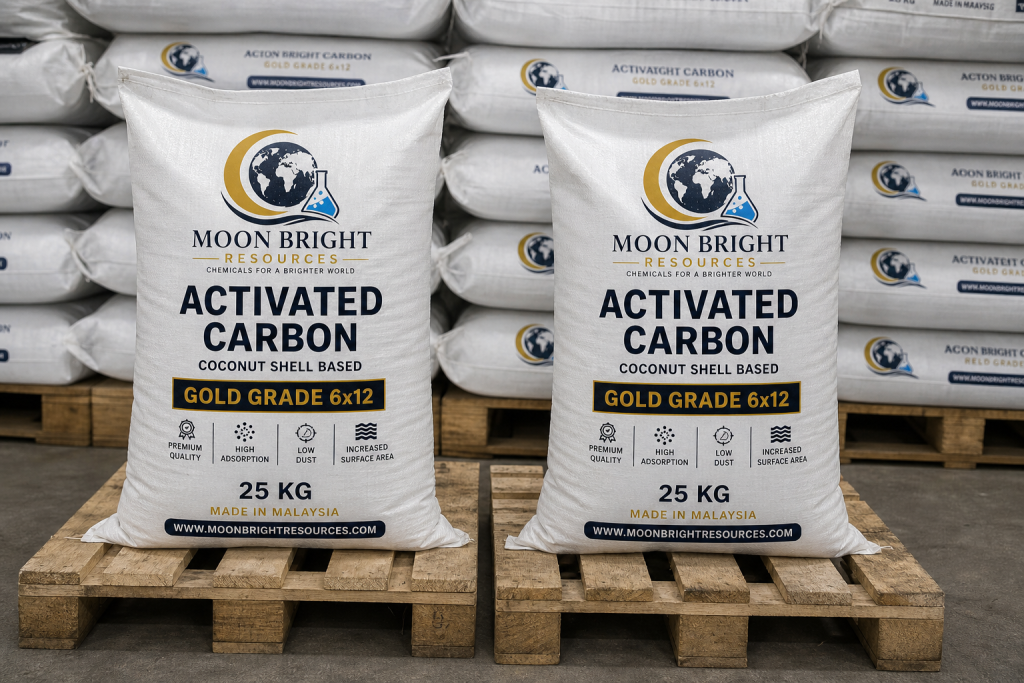
how to calculate activated carbon iodine value, coconut shell vs coal based activated carbon, granular activated carbon mesh size chart, VOC removal efficiency of activated carbon, industrial water purification carbon standards, AWWA B604 compliance water treatment, how activated carbon adsorbs heavy metals, regenerating granular activated carbon lifespan, food and beverage grade activated carbon specs, activated carbon filter pressure drop calculation.bulk activated carbon procurement guidelines, industrial water treatment chemical supply, high-iodine activated carbon wholesale, sourcing coconut shell activated carbon in bulk, B2B activated carbon suppliers Malaysia, commercial air filtration media procurement, granular activated carbon wholesale bulk pricing, municipal water treatment carbon specifications, bulk adsorbent media sourcing options, activated carbon bulk density and packaging specs

 English
  French
  Arabic
  Spanish
  Bulgarian