Sodium Cyanide Supplier (NaCN) is a high-purity industrial chemical primarily used in gold and silver mining, electroplating, chemical synthesis, and selected manufacturing processes. Industrial buyers should select a reliable sodium cyanide supplier capable of providing consistent product quality, batch-specific Certificates of Analysis (COA), Technical Data Sheets (TDS), Safety Data Sheets (SDS), compliant packaging, and dependable international logistics.
✔ Sodium cyanide is one of the most widely used reagents in precious metal extraction.
✔ Product purity and batch consistency are critical for industrial performance.
✔ Professional suppliers should provide COA, SDS, and TDS documentation with each shipment.
✔ Proper packaging, storage, transportation, and handling are essential due to the product’s hazardous nature.
✔ Working with an experienced exporter helps support regulatory compliance and international logistics.
Chapter 1: What Is Sodium Cyanide?
Quick Answer
Sodium cyanide (NaCN) is an inorganic chemical compound widely used in industrial applications, particularly in gold and silver mining, where it forms stable complexes with precious metals to support extraction processes. It is also used in electroplating, chemical synthesis, metal finishing, and other specialized industrial operations. Due to its hazardous nature, sodium cyanide should only be handled, transported, stored, and used by trained personnel in accordance with applicable regulations and the supplier’s Safety Data Sheet (SDS).
Introduction
Sodium cyanide is one of the most important specialty chemicals used in modern mining and industrial manufacturing. Its ability to form stable complexes with certain metals makes it a key reagent in gold and silver recovery processes, while its chemical properties also support applications in electroplating, organic synthesis, and metal treatment.
Industrial buyers prioritize more than just price when sourcing sodium cyanide. Product consistency, technical documentation, packaging, regulatory compliance, and supplier reliability all play critical roles in maintaining safe and efficient operations.
Because sodium cyanide is classified as a hazardous chemical, procurement teams should work only with suppliers who can provide complete documentation, compliant packaging, and professional logistics support.
Chemical Identity
Property
Value
Chemical Name
Sodium Cyanide
Chemical Formula
NaCN
CAS Number
143-33-9
Molecular Weight
49.01 g/mol
Appearance
White solid (commonly supplied as briquettes, pellets, or powder depending on product grade)
Solubility
Highly soluble in water
UN Classification
Subject to applicable transport regulations
What Makes Sodium Cyanide Important?
Sodium cyanide has become an essential industrial chemical because it enables efficient recovery of precious metals and supports several specialized manufacturing processes.
Industries that commonly use sodium cyanide include:
Gold mining
Silver mining
Electroplating
Metal finishing
Chemical manufacturing
Selected laboratory and industrial research applications
Its effectiveness, when used within properly designed industrial processes, has made it a widely adopted reagent in these sectors.
Common Product Forms
Industrial sodium cyanide is typically supplied as:
Briquettes
Pellets
Powder (where appropriate)
Specialized packaging for industrial applications
The preferred product form depends on the customer’s process requirements, handling systems, and operational procedures.
Why Technical Documentation Matters
Before purchasing sodium cyanide, industrial buyers should request:
Certificate of Analysis (COA)
Technical Data Sheet (TDS)
Safety Data Sheet (SDS)
These documents help buyers verify product quality, understand technical characteristics, and support safe handling and regulatory compliance.
Why Supplier Selection Is Critical
Choosing the right sodium cyanide supplier involves evaluating:
Product quality and consistency
Technical documentation
Packaging options
Export experience
Logistics capabilities
Customer support
Ability to meet agreed specifications
A supplier with strong technical expertise and international shipping experience can help reduce procurement risks and improve supply chain reliability.
Expert Insight
Because sodium cyanide is a hazardous industrial chemical, procurement decisions should prioritize product quality, documentation, regulatory compliance, and supplier capability alongside commercial considerations. Reliable suppliers play an important role in supporting safe transportation, quality assurance, and uninterrupted industrial operations.
Featured Snippet Opportunity
What is sodium cyanide used for?
Sodium cyanide (NaCN) is an industrial chemical primarily used in gold and silver mining, electroplating, chemical synthesis, and metal finishing. It is valued for its ability to form complexes with certain metals, supporting extraction and manufacturing processes. Because it is hazardous, it should only be handled and used by trained personnel following applicable regulations and the supplier’s Safety Data Sheet (SDS).
People Also Ask
What is sodium cyanide?
Sodium cyanide is an inorganic chemical compound with the formula NaCN. It is widely used in precious metal extraction, electroplating, and selected industrial manufacturing processes.
What industries use sodium cyanide?
Key industries include gold mining, silver mining, electroplating, metal finishing, and chemical manufacturing.
Why do buyers request a COA, TDS, and SDS?
These documents provide batch-specific quality data (COA), technical product information (TDS), and safety guidance (SDS), helping buyers evaluate the product before use.
Sodium Cyanide Chemical Properties and Technical Specifications
Quick Answer (Featured Snippet)
Sodium cyanide (NaCN) is a highly water-soluble inorganic compound supplied primarily as white briquettes, pellets, or powder for industrial applications. Procurement teams should verify the product’s purity, physical properties, packaging, and supporting technical documentation—including the Certificate of Analysis (COA), Technical Data Sheet (TDS), and Safety Data Sheet (SDS)—before purchase.
✔ Batch-specific COAs verify compliance with agreed specifications.
✔ Technical specifications should be reviewed before procurement.
✔ Quality consistency is essential for mining and industrial applications.
Understanding Sodium Cyanide
Sodium cyanide is an inorganic chemical compound that plays a critical role in several industrial processes. Due to its unique chemical properties, it is widely used in precious metal extraction, electroplating, and chemical manufacturing.
For procurement professionals, understanding the technical characteristics of sodium cyanide is essential for selecting the appropriate product and ensuring compatibility with operational requirements.
Chemical Identity
Property
Specification
Chemical Name
Sodium Cyanide
Chemical Formula
NaCN
CAS Number
143-33-9
EC Number
205-599-4
Molecular Weight
49.01 g/mol
Appearance
White crystalline solid
Odor
Faint bitter almond odor may be detectable by some individuals, but odor should never be relied upon as a warning indicator.
Solubility
Highly soluble in water
Chemical Family
Inorganic Cyanide Compound
The chemical identity remains consistent across industrial grades, while purity and impurity limits vary according to product specifications.
Physical Properties
Typical physical characteristics include:
Property
Typical Value*
Physical State
Solid
Color
White
Water Solubility
Highly soluble
Density
Product dependent
Melting Point
Refer to supplier TDS
pH (Solution)
Alkaline solution
*Values may vary slightly depending on manufacturing process and product grade. Buyers should always consult the supplier’s Technical Data Sheet (TDS) and batch-specific Certificate of Analysis (COA) for exact specifications.
Product Purity
Industrial sodium cyanide is manufactured to meet defined quality specifications established between the supplier and customer.
Typical procurement specifications evaluate:
Sodium cyanide content
Moisture content
Insoluble matter
Alkali content
Impurity limits
Physical appearance
The acceptable limits depend on the intended industrial application.
Product Forms
Sodium cyanide is commonly supplied in several physical forms to suit different industrial handling systems.
Briquettes
The most widely used product form in gold mining because it minimizes dust generation and supports controlled handling.
Pellets
Selected industrial operations use pelletized sodium cyanide for automated feeding systems and specialized process requirements.
Powder
Powdered sodium cyanide is supplied for specific industrial applications where permitted by operational procedures and safety requirements.
The choice depends on customer equipment, handling systems, and process design.
Why Purity Matters
High product consistency helps industrial operations maintain predictable process performance.
Procurement teams typically evaluate suppliers based on:
Consistent purity
Batch uniformity
Reliable manufacturing quality
Complete technical documentation
Traceable production records
These factors contribute to stable production and quality assurance.
Technical Documentation
Professional sodium cyanide suppliers should provide comprehensive documentation with each shipment.
Certificate of Analysis (COA)
The COA reports laboratory test results for the specific production batch supplied.
Typical information includes:
Batch number
Manufacturing date (where applicable)
Product specifications
Test methods
Laboratory results
Quality approval
Technical Data Sheet (TDS)
The TDS provides:
Product description
Typical physical properties
Technical characteristics
Recommended industrial applications
Storage guidance
Packaging information
Safety Data Sheet (SDS)
The SDS contains essential information regarding:
Hazard identification
Safe handling procedures
Storage requirements
Personal protective equipment (PPE)
Emergency response measures
Transportation information
Disposal guidance
Personnel should review the SDS before handling or transporting sodium cyanide.
Quality Assurance in Industrial Procurement
Industrial buyers generally include technical verification as part of their procurement process.
A typical evaluation includes:
Procurement Requirement
Why It Matters
Product Purity
Supports process consistency
Batch COA
Confirms compliance with specifications
TDS
Verifies technical suitability
SDS
Supports workplace safety
Packaging
Protects product integrity
Traceability
Simplifies quality control
A structured review helps ensure that purchased material meets operational expectations.
Expert Insight
For industrial chemicals such as sodium cyanide, procurement decisions should be based on verified technical specifications rather than price alone. Reviewing purity, batch-specific laboratory results, and supplier documentation helps reduce operational risk and supports consistent manufacturing performance.
Why Choose Moon Bright Resources?
Moon Bright Resources supplies sodium cyanide supported by professional documentation and export-ready logistics.
Our Technical Support Includes
✔ High-quality industrial sodium cyanide
✔ Batch-specific Certificate of Analysis (COA)
✔ Technical Data Sheet (TDS)
✔ Safety Data Sheet (SDS)
✔ Flexible industrial packaging
✔ Export documentation
✔ International shipping coordination
✔ Responsive procurement assistance
Our team works with mining companies, industrial manufacturers, and distributors to provide reliable sodium cyanide solutions that meet agreed technical specifications. Bulk Sodium Cyanide
People Also Ask
What is the CAS number for sodium cyanide?
The CAS Registry Number for sodium cyanide is 143-33-9.
Why is a COA important when buying sodium cyanide?
A Certificate of Analysis provides laboratory results for a specific production batch, allowing buyers to verify that the product meets the agreed quality specifications.
What technical documents should accompany a sodium cyanide shipment?
Professional suppliers typically provide a Certificate of Analysis (COA), Technical Data Sheet (TDS), Safety Data Sheet (SDS), commercial invoice, packing list, and any additional export documents required for the destination country.
What is the most common form of sodium cyanide supplied to industry?
Sodium cyanide is commonly supplied as briquettes, with pellets and powder also available for certain industrial applications depending on customer requirements and process design.
Featured Snippet Opportunity
What are the technical specifications of sodium cyanide?
Sodium cyanide (NaCN, CAS No. 143-33-9) is a white, highly water-soluble inorganic compound supplied primarily as briquettes, pellets, or powder. Industrial buyers should verify product purity, physical properties, packaging, and supporting documentation—including the COA, TDS, and SDS—to ensure the product meets their operational requirements.
Industrial Applications of Sodium Cyanide
Quick Answer (Featured Snippet)
Sodium cyanide is primarily used in gold and silver mining, where it helps recover precious metals through controlled leaching processes. It is also used in electroplating, metal finishing, chemical manufacturing, pharmaceutical intermediates, and laboratory applications. Industrial buyers should select the appropriate grade and follow all applicable safety regulations, as sodium cyanide is a highly hazardous chemical intended only for trained industrial users.
Quick Navigation
Gold Mining
Silver Mining
Electroplating
Chemical Manufacturing
Metal Treatment
Laboratory Applications
Why Industry Relies on Sodium Cyanide
Key Takeaways
✔ Gold mining is the largest industrial application for sodium cyanide.
✔ Sodium cyanide is also used in electroplating and chemical manufacturing.
✔ Different industries require different product specifications.
✔ Proper documentation and handling procedures are essential for all industrial applications.
✔ Consistent product quality contributes to efficient industrial processes.
Why Sodium Cyanide Is Widely Used in Industry
Sodium cyanide has become one of the most important industrial chemicals because of its unique chemical properties. It can form stable complexes with certain metals, making it valuable for extraction, recovery, and specialized manufacturing processes.
Its effectiveness has made it an essential raw material in several industries worldwide.
Industrial buyers generally prioritize:
Product consistency
High purity
Reliable technical documentation
Safe packaging
Dependable international supply
1. Gold Mining
Gold mining represents the largest global use of sodium cyanide.
In modern mining operations, sodium cyanide is used during controlled leaching processes to dissolve gold from crushed ore. Once dissolved, the gold-bearing solution undergoes additional recovery and refining stages using engineered industrial systems.
The widespread adoption of cyanide-based extraction has contributed to efficient processing of many gold deposits around the world.
Mining companies typically evaluate suppliers based on:
Product purity
Consistent quality
Reliable deliveries
Technical support
Documentation
Export capability
2. Silver Mining
The mining industry also uses sodium cyanide in the extraction of silver from suitable ores.
As with gold recovery, silver extraction is carried out using engineered industrial systems designed to maximize metal recovery while operating under applicable environmental and safety controls.
Reliable reagent quality helps support consistent plant performance.
3. Electroplating
Sodium cyanide is used in certain electroplating operations as part of specialized plating solutions.
These processes are employed to produce high-quality metallic coatings for industries such as:
Electronics
Automotive components
Aerospace
Industrial machinery
Precision engineering
The specific formulation of plating baths depends on the coating process and engineering requirements.
4. Chemical Manufacturing
Sodium cyanide serves as a raw material or intermediate in selected chemical manufacturing processes.
Industrial producers use it in the synthesis of certain specialty chemicals and intermediates under carefully controlled conditions.
Manufacturers require:
Consistent purity
Reliable batch quality
Comprehensive technical documentation
Secure transportation
5. Metal Treatment and Surface Finishing
Some industrial metal treatment processes use sodium cyanide in specialized formulations to improve surface properties or support specific finishing operations.
Applications vary according to manufacturing requirements and should be carried out only in facilities equipped to manage hazardous chemicals safely.
6. Laboratory and Research Applications
Qualified laboratories and research institutions may use sodium cyanide for analytical work or chemical research where appropriate approvals and safety procedures are in place.
Because of its hazardous properties, laboratory use requires strict controls, suitable facilities, and trained personnel.
Why Product Quality Matters Across Industries
Regardless of the application, industrial users depend on consistent product quality to support operational efficiency.
Professional procurement teams typically evaluate:
Purity consistency
Batch traceability
Technical documentation
Packaging integrity
Reliable deliveries
Supplier responsiveness
These factors help reduce operational disruptions and support quality assurance.
Industry-Specific Requirements
Industry
Primary Use
Typical Procurement Focus
Gold Mining
Precious metal extraction
High purity, reliable supply
Silver Mining
Metal recovery
Consistent quality
Electroplating
Surface finishing
Technical consistency
Chemical Manufacturing
Chemical synthesis
Batch traceability
Metal Processing
Industrial treatment
Documentation and quality
Research Laboratories
Analytical applications
Technical specifications
Procurement Considerations
When sourcing sodium cyanide for industrial applications, buyers should confirm:
Product grade
Purity specification
Packaging type
Certificate of Analysis (COA)
Technical Data Sheet (TDS)
Safety Data Sheet (SDS)
Delivery schedule
Export documentation
A structured procurement process supports operational reliability and compliance.
Expert Insight
Industrial users depend on sodium cyanide for processes that require consistent product quality and reliable supply. Beyond technical specifications, successful procurement also relies on complete documentation, professional logistics, and adherence to applicable safety and environmental regulations.
Why Choose Moon Bright Resources?
Moon Bright Resources supplies industrial sodium cyanide to qualified businesses worldwide with a focus on quality, documentation, and dependable international logistics.
Our Supply Capabilities
✔ High-quality sodium cyanide
✔ Batch-specific Certificate of Analysis (COA)
✔ Technical Data Sheet (TDS)
✔ Safety Data Sheet (SDS)
✔ Export-ready documentation
✔ Industrial packaging options
✔ Global shipping coordination
✔ Responsive procurement support
We work with mining companies, manufacturers, distributors, and industrial customers to support dependable sourcing and long-term supply relationships.
People Also Ask
What is sodium cyanide mainly used for?
Sodium cyanide is primarily used in gold and silver mining. It also has applications in electroplating, chemical manufacturing, metal finishing, and certain laboratory processes.
Why is sodium cyanide important in mining?
Its chemical properties enable efficient recovery of precious metals from suitable ores using engineered industrial processes.
What industries buy sodium cyanide?
Major users include mining companies, electroplating facilities, chemical manufacturers, metal processing plants, and qualified research laboratories.
What should industrial buyers verify before purchasing?
Buyers should review the required product specifications, packaging, and technical documentation—including the COA, TDS, and SDS—and confirm that the supplier can meet agreed delivery and quality requirements.
Featured Snippet Opportunity
What industries use sodium cyanide?
Sodium cyanide is primarily used in gold and silver mining, with additional applications in electroplating, chemical manufacturing, metal treatment, and laboratory research. Industrial buyers typically evaluate suppliers based on product quality, technical documentation, packaging, and reliable international supply.
Sodium Cyanide in Gold Mining: Applications, Procurement, and Supply Considerations
Quick Answer (Featured Snippet)
Sodium cyanide is widely used by the gold mining industry as a reagent in industrial gold recovery processes. Mining companies typically select suppliers based on consistent product quality, reliable logistics, complete technical documentation (COA, TDS, and SDS), and compliance with applicable transport and regulatory requirements. Because sodium cyanide is a highly hazardous chemical, it should only be supplied to qualified industrial users and handled under appropriate safety and regulatory controls.
Quick Navigation
Why Gold Mining Uses Sodium Cyanide
Advantages for Industrial Operations
Product Quality Requirements
Procurement Considerations
Supply Chain Challenges
Choosing a Reliable Supplier
Key Takeaways
✔ Gold mining is the largest industrial market for sodium cyanide.
✔ Mining companies prioritize reliable supply chains and technical documentation.
✔ Safe transportation and regulatory compliance are essential.
✔ Long-term supplier relationships help reduce procurement risks.
Why the Gold Mining Industry Relies on Sodium Cyanide
Gold mining remains the largest commercial market for sodium cyanide worldwide.
Mining operations require a dependable supply of high-quality sodium cyanide to support continuous production schedules. Interruptions in chemical supply can affect plant operations, making supplier reliability an important procurement consideration.
In addition to product quality, mining companies evaluate suppliers based on documentation, export capability, packaging options, and logistics performance.
Procurement Priorities for Gold Mining Companies
Professional mining companies typically assess suppliers using several criteria.
Product Consistency
Consistent product quality helps support stable industrial processes and simplifies quality control.
Reliable Supply
Mining operations often require scheduled deliveries over extended periods. Suppliers should demonstrate the capacity to support ongoing supply commitments.
Technical Documentation
Industrial buyers generally request:
Certificate of Analysis (COA)
Technical Data Sheet (TDS)
Safety Data Sheet (SDS)
These documents support procurement reviews, quality assurance, and workplace safety programs.
Export Experience
For international shipments, suppliers should be able to prepare the required commercial and transport documentation and coordinate logistics in accordance with applicable regulations.
Packaging Options for Mining Operations
The appropriate packaging depends on the mine’s handling systems, storage facilities, and order volume.
Common industrial packaging includes:
Steel drums
Intermediate Bulk Containers (IBCs), where appropriate
Bulk industrial packaging
Specialized transport containers designed for hazardous materials
Packaging should comply with applicable transport regulations and preserve product integrity during transit.
Supply Chain Considerations
Gold mining operations often rely on long-term procurement planning to reduce the risk of production interruptions.
Important considerations include:
Manufacturing capacity
Inventory planning
Shipping schedules
Customs clearance
Documentation accuracy
Delivery performance
Communication between supplier and buyer
Strong coordination throughout the supply chain helps improve procurement efficiency.
Factors That Influence Purchasing Decisions
Mining companies commonly evaluate suppliers on:
Evaluation Factor
Why It Matters
Product Quality
Supports consistent operations
Documentation
Assists quality and compliance processes
Export Capability
Facilitates international shipments
Packaging Options
Matches operational needs
Delivery Reliability
Reduces supply disruptions
Customer Support
Improves procurement coordination
Long-Term Capacity
Supports ongoing production requirements
Quality Assurance
Industrial buyers generally include quality verification as part of their procurement process.
Typical quality assurance activities may include:
Reviewing batch-specific COAs
Confirming product specifications
Inspecting shipment documentation
Verifying packaging condition upon receipt
Maintaining batch traceability for inventory management
These practices support consistent procurement standards.
Sustainability and Responsible Supply
Mining companies increasingly evaluate suppliers on broader operational criteria, including:
Quality management systems
Reliable documentation
Responsible logistics
Compliance with applicable regulations
Transparent communication throughout the supply chain
Working with experienced suppliers can help support responsible sourcing objectives.
Expert Insight
For mining operations, the value of a sodium cyanide supplier extends beyond the product itself. Consistent quality, dependable logistics, accurate documentation, and responsive technical support contribute to supply continuity and more efficient procurement management.
Why Choose Moon Bright Resources?
Moon Bright Resources supplies sodium cyanide to qualified industrial customers with a focus on reliability, documentation, and international procurement support.
Our Advantages
✔ High-quality industrial sodium cyanide
✔ Batch-specific Certificate of Analysis (COA)
✔ Technical Data Sheet (TDS)
✔ Safety Data Sheet (SDS)
✔ Export-ready documentation
✔ Industrial packaging solutions
✔ International logistics coordination
✔ Responsive procurement support
✔ Long-term supply partnership opportunities
Our team works closely with qualified mining companies, distributors, and industrial buyers to deliver dependable sodium cyanide solutions that meet agreed commercial and technical requirements.
People Also Ask
Why is sodium cyanide widely used in the gold mining industry?
Sodium cyanide is widely used because it is an established reagent in industrial gold recovery processes. Mining companies also value suppliers that provide consistent product quality, technical documentation, and dependable logistics.
What documents should accompany a sodium cyanide shipment?
Typical documentation includes a Certificate of Analysis (COA), Technical Data Sheet (TDS), Safety Data Sheet (SDS), commercial invoice, packing list, and transport documents, with additional documentation depending on the destination country’s requirements.
What should mining companies look for in a sodium cyanide supplier?
Yes. Sodium cyanide is traded internationally, but shipments must comply with applicable regulations governing the transport of hazardous materials and should be managed by qualified suppliers and logistics providers.
Featured Snippet Opportunity
What should mining companies consider when buying sodium cyanide?
When purchasing sodium cyanide, mining companies should evaluate product quality, batch consistency, technical documentation (COA, TDS, and SDS), packaging options, export experience, logistics capabilities, and supplier reliability. These factors help support efficient procurement and continuity of industrial operations.
Sodium Cyanide Product Grades, Forms, and Packaging Options
Quick Answer (Featured Snippet)
Industrial sodium cyanide is commonly supplied as briquettes, pellets, or powder, depending on customer requirements and manufacturing practices. Buyers should select the appropriate product form and packaging based on their handling systems, storage capacity, transportation requirements, and operational needs. Professional suppliers also provide supporting documentation, including a Certificate of Analysis (COA), Technical Data Sheet (TDS), and Safety Data Sheet (SDS).
Quick Navigation
Product Forms
Industrial Grades
Packaging Options
Choosing the Right Packaging
Documentation Requirements
Procurement Considerations
Key Takeaways
✔ Briquettes are the most commonly supplied form for industrial and mining customers.
✔ Product form should match the customer’s handling and storage systems.
✔ Packaging plays an important role in product protection and transportation.
✔ Industrial buyers should request COA, TDS, and SDS before shipment.
✔ Reliable packaging helps maintain product quality throughout the supply chain.
Understanding Sodium Cyanide Product Forms
Industrial sodium cyanide is manufactured in several physical forms to meet different operational requirements.
Although the chemical composition remains the same, the physical form influences handling, storage, transportation, and dosing systems.
Professional suppliers help customers select the most appropriate product based on their facility design and procurement requirements.
1. Sodium Cyanide Briquettes
Sodium cyanide briquettes are the most widely supplied form for industrial customers, particularly in the mining sector.
Typical Advantages
Uniform size
Easier industrial handling
Reduced dust generation compared with fine powders
Suitable for automated industrial feeding systems
Convenient storage and transportation
Many large mining operations specify briquettes because they integrate efficiently with established material-handling systems.
2. Sodium Cyanide Pellets
Pellets are another solid form supplied for selected industrial applications.
They are commonly chosen when operational equipment or customer specifications require a consistent pellet size.
Typical characteristics include:
Consistent dimensions
Controlled handling
Compatibility with certain automated systems
Reliable packaging performance
3. Sodium Cyanide Powder
Powdered sodium cyanide is available for specialized industrial applications where appropriate.
Because powdered materials may require additional handling precautions, customers should ensure that their facilities and operating procedures are suitable for the selected product form.
Industrial Product Grades
Industrial buyers typically purchase sodium cyanide according to agreed technical specifications.
Procurement specifications commonly consider:
Product purity
Moisture limits
Insoluble matter
Physical appearance
Batch consistency
Packaging requirements
Rather than focusing solely on price, buyers should verify that the product meets the technical requirements of their process.
Packaging Options
Packaging is an important part of industrial chemical procurement because it protects product quality during transportation and storage.
Professional suppliers commonly offer:
Steel Drums
Suitable for many industrial users and international shipments.
Advantages include:
Durable construction
Good product protection
Efficient palletization
Compatibility with international freight
Intermediate Bulk Containers (IBCs)
Where appropriate for the product and regulatory requirements, IBCs may be used for customers requiring higher-volume handling.
Potential benefits include:
Reduced packaging waste
Improved warehouse efficiency
Simplified material handling
Availability depends on the product, customer requirements, and applicable regulations.
Bulk Industrial Packaging
Large industrial consumers may request specialized bulk packaging designed for high-volume operations, subject to regulatory requirements and supplier capabilities.
Choosing the Right Packaging
The best packaging depends on several operational factors.
Consideration
Why It Matters
Order Volume
Determines packaging efficiency
Storage Capacity
Influences warehouse planning
Handling Equipment
Ensures compatibility with existing systems
Transportation Method
Supports safe delivery
Delivery Frequency
Helps optimize inventory management
Selecting appropriate packaging can improve logistics efficiency while helping maintain product integrity.
Why Packaging Quality Matters
Industrial packaging should:
Protect the product during transportation
Help prevent contamination
Support traceability
Simplify warehouse operations
Meet applicable transport requirements
Reliable packaging contributes to efficient procurement and inventory management.
Technical Documentation
Every shipment should be accompanied by appropriate documentation.
Professional suppliers generally provide:
Certificate of Analysis (COA)
Verifies laboratory test results for the supplied production batch.
Technical Data Sheet (TDS)
Provides technical specifications and product information.
Safety Data Sheet (SDS)
Contains guidance on safe handling, storage, transportation, and emergency response.
These documents help buyers evaluate product quality and support internal procurement procedures.
Procurement Checklist
Before confirming an order, buyers should verify:
✔ Product form
✔ Required purity
✔ Packaging type
✔ COA availability
✔ TDS reviewed
✔ SDS received
✔ Batch traceability
✔ Delivery schedule
✔ Export documentation
Completing this checklist helps support efficient procurement and quality assurance.
Expert Insight
Selecting the appropriate product form and packaging is an important part of industrial procurement. Matching packaging to storage capacity, transportation methods, and operational requirements can improve supply chain efficiency while helping preserve product quality throughout delivery.
Why Choose Moon Bright Resources?
Moon Bright Resources supplies industrial sodium cyanide supported by reliable packaging solutions and professional export services.
Our Packaging Solutions
✔ High-quality sodium cyanide briquettes
✔ Industrial packaging options
✔ Batch-specific Certificate of Analysis (COA)
✔ Technical Data Sheet (TDS)
✔ Safety Data Sheet (SDS)
✔ Export-ready documentation
✔ International freight coordination
✔ Responsive procurement support
We work closely with mining companies, manufacturers, and industrial distributors to provide packaging solutions that align with operational and logistics requirements.
People Also Ask
What is the most common form of sodium cyanide?
Briquettes are the most commonly supplied form for industrial and mining applications due to their suitability for handling and transportation.
What packaging options are available?
Depending on customer requirements and regulatory considerations, sodium cyanide may be supplied in steel drums, approved bulk packaging, or other industrial packaging formats.
Why is packaging important?
Appropriate packaging helps protect product quality during transportation, supports safe handling, and improves warehouse efficiency.
What documents should accompany packaged sodium cyanide?
Industrial shipments are typically supported by a Certificate of Analysis (COA), Technical Data Sheet (TDS), Safety Data Sheet (SDS), commercial invoice, packing list, and transport documentation as required.
Featured Snippet Opportunity
How is sodium cyanide packaged for industrial use?
Industrial sodium cyanide is commonly supplied as briquettes, pellets, or powder and packaged in approved industrial containers based on customer requirements and applicable transport regulations. Buyers should verify the product form, packaging, and supporting documentation—including the COA, TDS, and SDS—before shipment.
Sodium Cyanide Storage, Transportation, and Supply Chain Management
Quick Answer (Featured Snippet)
Sodium cyanide is transported and stored under strict regulatory requirements because it is a highly hazardous industrial chemical. Qualified suppliers provide compliant packaging, complete transport documentation, and coordinated logistics to support safe delivery and reliable supply. Industrial buyers should ensure storage, transportation, and inventory management follow applicable regulations, the supplier’s Safety Data Sheet (SDS), and their organization’s safety procedures.
Quick Navigation
Why Proper Storage Matters
Transportation Requirements
International Shipping
Inventory Management
Supply Chain Planning
Procurement Best Practices
Key Takeaways
✔ Sodium cyanide should only be transported using approved packaging and qualified logistics providers.
✔ Storage facilities should follow applicable regulations and the supplier’s SDS.
✔ Reliable documentation supports customs clearance and quality assurance.
✔ Experienced suppliers simplify international procurement.
Why Storage and Transportation Are Critical
For industrial chemicals, reliable logistics are just as important as product quality.
Because sodium cyanide is classified as a hazardous material, every stage of the supply chain—from manufacturing and packaging to transportation, customs clearance, warehousing, and final delivery—requires careful planning and compliance with applicable regulations.
Professional suppliers work closely with logistics providers to help ensure products arrive in good condition and with the required documentation.
Storage Considerations
Industrial facilities should establish storage procedures that are consistent with:
The supplier’s Safety Data Sheet (SDS)
Applicable local regulations
Workplace safety programs
Internal operating procedures
Storage facilities typically consider factors such as:
Secure storage areas
Environmental conditions appropriate for the product
Inventory rotation
Access control
Product identification and traceability
Specific storage practices should always follow the manufacturer’s recommendations and regulatory requirements.
Sodium Cyanide Supplier
Transportation Requirements
International transportation of sodium cyanide involves coordination between manufacturers, freight forwarders, carriers, customs authorities, and importers.
Professional suppliers generally ensure that shipments include:
Approved industrial packaging
Correct hazard communication labels
Commercial invoice
Packing list
Certificate of Analysis (COA)
Technical Data Sheet (TDS)
Safety Data Sheet (SDS)
Transport documentation required by applicable regulations
Accurate documentation helps reduce delays during customs clearance and delivery. Global Sodium Cyanide Market
International Shipping
Many mining companies and industrial manufacturers import sodium cyanide from global suppliers.
Successful international shipments depend on:
Accurate Documentation
Complete documentation helps facilitate customs processing and supports regulatory compliance.
Reliable Freight Coordination
Experienced logistics providers help manage transportation schedules and communication throughout the shipment.
Packaging Integrity
Proper packaging helps protect the product during loading, transportation, and unloading.
Delivery Planning
Advance planning supports production schedules and inventory management.
Supply Chain Challenges
Global chemical supply chains may be affected by:
Shipping capacity
Port congestion
Customs processing
Seasonal demand
Manufacturing schedules
International freight availability
Industrial buyers often address these factors through proactive procurement planning and close coordination with suppliers. Sodium Cyanide Price per Ton
Inventory Management
Maintaining appropriate inventory levels can help support uninterrupted operations.
Procurement teams commonly review:
Consumption forecasts
Lead times
Delivery schedules
Warehouse capacity
Supplier production timelines
Inventory strategies vary according to operational requirements and business objectives.
Procurement Best Practices
Industrial buyers can strengthen their procurement process by:
✔ Confirming technical specifications before ordering.
✔ Reviewing COA, TDS, and SDS documentation.
✔ Planning purchases in advance of anticipated demand.
✔ Communicating delivery schedules clearly.
✔ Working with suppliers experienced in international logistics.
✔ Maintaining ongoing communication throughout the procurement process.
Choosing a Reliable Logistics Partner
When evaluating suppliers, consider their ability to provide:
Capability
Benefit
Export Experience
Supports international shipments
Complete Documentation
Simplifies customs procedures
Packaging Expertise
Helps protect product integrity
Freight Coordination
Improves delivery reliability
Procurement Support
Enhances communication
Long-Term Supply Capacity
Supports business continuity
Expert Insight
Effective supply chain management extends beyond manufacturing. Reliable documentation, compliant packaging, coordinated logistics, and proactive procurement planning help industrial buyers reduce supply disruptions and maintain operational continuity.
Why Choose Moon Bright Resources?
Moon Bright Resources supports qualified industrial customers with dependable sodium cyanide supply and international logistics expertise. Sodium Cyanide Manufacturer
Our Logistics Support Includes
✔ Export-ready documentation
✔ Batch-specific Certificate of Analysis (COA)
✔ Technical Data Sheet (TDS)
✔ Safety Data Sheet (SDS)
✔ Industrial packaging solutions
✔ International freight coordination
✔ Procurement assistance
✔ Responsive customer service
Our team works with mining companies, industrial manufacturers, and distributors to help simplify international procurement while supporting quality and documentation requirements.
People Also Ask
How is sodium cyanide transported internationally?
Sodium cyanide is transported under applicable regulations for hazardous materials using approved packaging, appropriate documentation, and qualified logistics providers. Shipment requirements vary by destination and transport mode.
What documents are required for international shipments?
Typical documentation includes a commercial invoice, packing list, Certificate of Analysis (COA), Technical Data Sheet (TDS), Safety Data Sheet (SDS), transport documents, and any country-specific import requirements. Sodium Cyanide Pellets
Why is supply chain planning important?
Planning helps industrial buyers coordinate deliveries, manage inventory, reduce procurement delays, and support continuity of operations.
What should buyers evaluate in a supplier’s logistics capabilities?
Key considerations include export experience, documentation quality, packaging options, freight coordination, communication, and the ability to support long-term supply requirements.
Featured Snippet Opportunity
What should buyers consider when importing sodium cyanide?
When importing sodium cyanide, buyers should evaluate supplier experience, packaging, technical documentation (COA, TDS, and SDS), export capability, freight coordination, customs requirements, and delivery planning. Choosing an experienced supplier helps support efficient procurement and reliable international supply.
International Procurement Guide for Sodium Cyanide Buyers
Quick Answer (Featured Snippet)
Successful sodium cyanide procurement involves more than comparing prices. Industrial buyers should evaluate supplier qualifications, product specifications, technical documentation, packaging, logistics capabilities, export experience, and after-sales support. A structured procurement process helps reduce supply chain risks and supports consistent operations.
Quick Navigation
Understanding Industrial Procurement
Procurement Planning
Supplier Evaluation Criteria
Documentation Requirements
International Trade Considerations
Common Procurement Challenges
Best Practices for Long-Term Supply
Key Takeaways
✔ Procurement decisions should consider quality, documentation, logistics, and supplier capability—not just price.
✔ Clear technical specifications reduce the risk of receiving unsuitable products.
✔ Complete documentation supports quality assurance and customs clearance.
✔ Long-term supplier relationships can improve supply continuity.
Industrial procurement is a strategic process that directly affects production continuity, quality assurance, and supply chain performance. For hazardous industrial chemicals such as sodium cyanide, procurement teams typically evaluate multiple factors before placing an order. Bulk Sodium Cyanide Price
A well-defined procurement process helps organizations:
Reduce sourcing risks.
Maintain consistent product quality.
Support production schedules.
Improve inventory management.
Simplify supplier communication.
Step 1: Define Technical Requirements
Before requesting quotations, buyers should clearly specify:
Required product grade
Purity requirements
Preferred product form (briquettes, pellets, or other approved forms)
Packaging requirements
Estimated purchase volume
Delivery schedule
Destination country
Providing detailed specifications enables suppliers to prepare accurate quotations and reduces the likelihood of misunderstandings. Sodium Cyanide for Silver Mining
Step 2: Evaluate Supplier Capabilities
Supplier selection should include a review of operational and commercial capabilities.
Typical evaluation criteria include:
Evaluation Area
Why It Matters
Manufacturing Capacity
Supports long-term supply commitments
Product Quality
Helps ensure consistent performance
Technical Documentation
Supports quality assurance and compliance
Export Experience
Facilitates international shipments
Logistics Coordination
Improves delivery reliability
Customer Support
Enhances communication and issue resolution
A structured supplier assessment can contribute to more reliable procurement outcomes.
Step 3: Review Technical Documentation
Before confirming an order, procurement teams generally request:
Certificate of Analysis (COA)
Confirms the quality results for the specific production batch.
Technical Data Sheet (TDS)
Provides technical specifications and typical product characteristics.
Safety Data Sheet (SDS)
Supports safe handling, storage, transportation, and emergency planning.
Reviewing these documents before shipment helps buyers verify that the supplied material aligns with their procurement requirements. Sodium Cyanide Price
Step 4: Confirm Commercial Terms
A purchase agreement should clearly define:
Product specifications
Quantity
Packaging
Delivery schedule
Incoterms (such as EXW, FOB, CFR, CIF, or DAP, as agreed)
Payment terms
Inspection requirements
Documentation to be provided
Clear commercial terms reduce ambiguity and help both parties manage expectations. Sodium Cyanide Supplier
Step 5: Coordinate International Logistics
International procurement often involves multiple stakeholders, including:
Manufacturer
Exporter
Freight forwarder
Carrier
Customs broker
Importer
Close coordination among these parties helps improve shipment visibility and reduce delays. Sodium Cyanide Supplier
Common Procurement Challenges
Industrial buyers may encounter challenges such as:
Fluctuating global freight costs
Customs processing delays
Extended manufacturing lead times
Documentation discrepancies
Inventory shortages
Changes in import regulations
Developing contingency plans and maintaining open communication with suppliers can help manage these risks. Sodium Cyanide Supplier
Procurement Checklist
Before placing an order, confirm:
✔ Product specifications
✔ Quantity
✔ Packaging requirements
✔ Batch-specific COA
✔ TDS reviewed
✔ SDS received
✔ Commercial terms agreed
✔ Delivery schedule confirmed
✔ Required import documentation identified
✔ Supplier contact information verified
Expert Insight
A successful procurement strategy balances commercial considerations with technical verification and supply chain planning. Organizations that establish clear specifications, review documentation carefully, and maintain collaborative supplier relationships are often better positioned to achieve consistent procurement outcomes. Sodium Cyanide Supplier
Why Choose Moon Bright Resources?
Moon Bright Resources supports qualified industrial buyers with procurement solutions tailored to international trade.
Our Procurement Services
✔ Industrial-grade sodium cyanide
✔ Batch-specific Certificate of Analysis (COA)
✔ Technical Data Sheet (TDS)
✔ Safety Data Sheet (SDS)
✔ Export documentation support
✔ Flexible packaging options
✔ International logistics coordination
✔ Responsive commercial support
✔ Long-term supply partnership opportunities
We work with mining companies, manufacturers, and distributors to provide dependable sourcing solutions that align with customer specifications and international trade requirements.
People Also Ask
What should I check before buying sodium cyanide?
Review the product specifications, packaging, Certificate of Analysis (COA), Technical Data Sheet (TDS), Safety Data Sheet (SDS), supplier qualifications, and agreed commercial terms before confirming an order.
What documents are important for procurement?
Key documents include the COA, TDS, SDS, commercial invoice, packing list, and any import or transport documents required by the destination country. Sodium Cyanide Supplier
Why is supplier evaluation important?
Evaluating supplier capabilities helps buyers assess product quality, documentation practices, export experience, logistics support, and the ability to meet long-term supply commitments.
How can procurement risks be reduced?
Clearly defining technical requirements, reviewing documentation, confirming commercial terms, and planning logistics in advance can help reduce procurement risks. Sodium Cyanide Supplier
How to Choose a Reliable Sodium Cyanide Supplier
Quick Answer (Featured Snippet)
Choosing a reliable sodium cyanide supplier requires evaluating more than price. Industrial buyers should assess product quality, technical documentation, manufacturing capability, export experience, packaging standards, logistics support, and customer service. Suppliers that consistently provide Certificates of Analysis (COA), Technical Data Sheets (TDS), Safety Data Sheets (SDS), and dependable international delivery are generally better positioned to support long-term procurement requirements.
Quick Navigation
Why Supplier Selection Matters
Key Evaluation Criteria
Documentation Requirements
Export Experience
Quality Assurance
Building Long-Term Partnerships
Key Takeaways
✔ A reliable supplier delivers consistent quality—not just competitive pricing.
✔ Complete documentation helps streamline procurement and regulatory compliance.
✔ Export experience is valuable for international buyers.
✔ Long-term partnerships can improve supply continuity and planning.
✔ Technical support and responsive communication are important selection criteria.
Why Supplier Selection Matters
Selecting the right sodium cyanide supplier is one of the most important decisions an industrial buyer can make. While pricing remains an important commercial factor, it should be considered alongside quality assurance, logistics capability, technical documentation, and long-term reliability.
An experienced supplier contributes to:
Consistent product availability
Reduced procurement risks
Better supply chain visibility
Reliable documentation
Responsive commercial support
These factors are particularly important for industries where uninterrupted chemical supply supports continuous production.
Characteristics of a Reliable Supplier
Professional procurement teams often evaluate suppliers using multiple performance indicators.
1. Consistent Product Quality
Product quality should remain consistent from batch to batch.
Buyers commonly verify:
Product specifications
Batch consistency
Manufacturing controls
Traceability
Laboratory testing
Consistent quality helps support predictable industrial performance and reduces quality-related disruptions.
2. Complete Technical Documentation
Every shipment should be supported by clear and accurate documentation.
International shipments involve multiple regulatory and logistical requirements.
Experienced exporters can assist with:
Export documentation
Freight coordination
Customs requirements
Shipment scheduling
Communication throughout the delivery process
Export capability is especially important for customers purchasing across international borders.
4. Packaging Standards
Packaging should protect product integrity throughout transportation and storage.
Industrial buyers may consider:
Packaging quality
Container suitability
Product labeling
Batch identification
Shipment protection
Appropriate packaging supports efficient warehousing and inventory management.
5. Customer Service and Technical Support
A reliable supplier provides support before, during, and after delivery.
Key indicators include:
Prompt quotation responses
Technical assistance
Documentation support
Order updates
Clear communication
Responsive issue resolution
Strong customer service can simplify procurement and strengthen long-term business relationships.
Supplier Evaluation Checklist
Evaluation Area
Questions to Ask
Product Quality
Are product specifications consistent?
Documentation
Are COA, TDS, and SDS provided?
Packaging
Are packaging options suitable for my operation?
Export Capability
Can the supplier support international shipments?
Logistics
Is delivery coordination reliable?
Communication
Are inquiries answered promptly and clearly?
Experience
Does the supplier have experience serving industrial customers?
Using a structured checklist helps procurement teams compare suppliers objectively.
Long-Term Supply Partnerships
Many industrial organizations prefer to establish long-term supplier relationships rather than purchasing on a shipment-by-shipment basis.
Potential advantages include:
More predictable supply planning
Consistent product quality
Streamlined procurement processes
Better communication
Improved inventory coordination
Long-term partnerships can support operational efficiency while reducing procurement uncertainty.
Expert Insight
The most successful procurement strategies emphasize supplier reliability, technical competence, and transparent communication alongside commercial competitiveness. A supplier that consistently delivers quality products, complete documentation, and dependable logistics can become a valuable long-term business partner.
Why Choose Moon Bright Resources?
Moon Bright Resources supports qualified industrial customers with reliable sodium cyanide sourcing and international procurement services.
Our Commitment
✔ High-quality industrial sodium cyanide
✔ Batch-specific Certificate of Analysis (COA)
✔ Technical Data Sheet (TDS)
✔ Safety Data Sheet (SDS)
✔ Flexible industrial packaging
✔ Export-ready documentation
✔ International logistics coordination
✔ Responsive commercial support
✔ Long-term supply partnerships
We are committed to helping mining companies, manufacturers, and distributors source industrial chemicals with confidence through dependable service, technical support, and efficient global logistics.
People Also Ask
What should I look for in a sodium cyanide supplier?
Evaluate product quality, technical documentation, export experience, packaging, logistics capabilities, and customer support. These factors help ensure reliable procurement and consistent supply.
Why are COA, TDS, and SDS important?
These documents verify product quality, describe technical characteristics, and provide safety information, supporting procurement decisions and regulatory compliance.
Is supplier experience important for international buyers?
Yes. Experienced suppliers are often better equipped to manage export documentation, logistics coordination, and customs requirements for international shipments.
Can long-term supplier relationships benefit procurement?
Long-term relationships can improve communication, supply planning, consistency, and overall procurement efficiency.
Featured Snippet Opportunity
How do you choose a reliable sodium cyanide supplier?
Choose a sodium cyanide supplier by evaluating product quality, batch consistency, technical documentation (COA, TDS, and SDS), packaging standards, export experience, logistics capabilities, and customer support. A reliable supplier should be able to meet agreed specifications while providing dependable international delivery and responsive commercial service.
Sodium Cyanide Price Factors and Global Market Trends
Quick Answer (Featured Snippet)
The price of sodium cyanide depends on several factors, including product grade, order volume, packaging, raw material costs, manufacturing capacity, transportation, destination country, and global market conditions. Industrial buyers should evaluate total procurement value—including product quality, documentation, logistics, and supplier reliability—rather than selecting a supplier based solely on price.
Quick Navigation
What Influences Sodium Cyanide Prices?
Global Market Trends
Bulk Purchasing Considerations
Hidden Procurement Costs
Budget Planning
How to Request an Accurate Quotation
Key Takeaways
✔ Sodium cyanide prices fluctuate with raw material, energy, and freight costs.
✔ Bulk orders often benefit from more competitive pricing structures.
✔ Packaging and logistics contribute significantly to total procurement costs.
✔ Technical documentation and supplier reliability add long-term value.
✔ Procurement planning can help buyers manage market volatility.
Understanding Sodium Cyanide Pricing
Unlike standardized commodities traded on public exchanges, sodium cyanide pricing is typically based on commercial quotations that reflect the buyer’s technical requirements and delivery terms.
The final purchase price generally includes more than the chemical itself. Buyers should consider packaging, logistics, documentation, and delivery conditions when evaluating quotations.
Factors That Influence Sodium Cyanide Prices
1. Product Grade and Specifications
Different industrial applications may require different specifications.
Pricing may vary depending on:
Product purity
Physical form (briquettes, pellets, or other approved forms)
Quality requirements
Customer specifications
Higher specification requirements may involve additional quality control and testing.
2. Order Volume
Order size is an important commercial factor.
Industrial buyers purchasing larger quantities may benefit from:
Improved freight efficiency
Reduced packaging costs per unit
Long-term supply agreements
More predictable procurement planning
Pricing structures vary between suppliers and should be evaluated on a case-by-case basis.
3. Packaging Requirements
Packaging affects both handling and transportation costs.
Pricing may differ depending on:
Packaging type
Packaging materials
Export packaging requirements
Shipment configuration
Selecting the appropriate packaging helps optimize logistics while protecting product integrity.
4. Transportation and Freight
International freight can represent a significant portion of the overall procurement cost.
Variables include:
Shipping method
Destination country
Port charges
Inland transportation
Customs-related expenses
Insurance (where applicable)
Evaluating the total landed cost provides a more complete view of procurement expenses.
5. Global Market Conditions
Market conditions can influence pricing over time.
Examples include:
Changes in raw material availability
Energy costs
Manufacturing capacity
International shipping conditions
Currency exchange rates
Regional demand from mining and manufacturing sectors
Long-term procurement planning can help organizations manage these fluctuations.
Total Cost of Ownership
Rather than comparing only the quoted product price, experienced procurement teams often evaluate the total cost of ownership.
Cost Element
Procurement Impact
Product Price
Initial purchase cost
Packaging
Product protection and handling
Freight
Transportation expenses
Documentation
Compliance and customs support
Delivery Reliability
Production continuity
Supplier Support
Procurement efficiency
Product Quality
Operational consistency
A broader evaluation can help buyers identify the most cost-effective long-term supplier.
Budget Planning for Industrial Buyers
Procurement teams often prepare annual purchasing plans that include:
Forecast demand
Inventory requirements
Expected lead times
Freight planning
Budget allocation
Supplier performance reviews
This structured approach supports more efficient purchasing and helps reduce the impact of market changes.
Requesting an Accurate Quotation
To receive an accurate quotation, buyers should provide:
Product specification
Quantity required
Preferred packaging
Destination port or delivery location
Preferred Incoterm (such as FOB, CFR, CIF, or DAP)
Required delivery timeline
Documentation requirements
Providing complete information allows suppliers to prepare more precise commercial offers.
Expert Insight
The lowest quoted price is not always the lowest procurement cost. Industrial buyers often achieve better long-term value by considering product quality, documentation, logistics, and supplier reliability alongside the purchase price. A comprehensive evaluation supports more informed sourcing decisions and reduces the risk of supply disruptions.
We work with mining companies, manufacturers, and distributors to provide transparent quotations that reflect customer specifications, logistics requirements, and international delivery terms.
People Also Ask
What affects the price of sodium cyanide?
Key factors include product specifications, order volume, packaging, transportation costs, raw material prices, energy costs, and global market conditions.
Do bulk purchases reduce procurement costs?
Larger orders may improve freight efficiency and reduce packaging costs per unit. Commercial terms depend on supplier capabilities and order requirements.
Why should buyers compare more than price?
Evaluating documentation, logistics, product quality, and supplier reliability helps determine the total procurement value rather than focusing only on the initial purchase price.
How can I request a quotation?
Provide the required product specifications, quantity, packaging preferences, destination, preferred delivery terms, and documentation requirements so the supplier can prepare an accurate quotation.
Featured Snippet Opportunity
What determines the price of sodium cyanide?
The price of sodium cyanide is influenced by product specifications, order volume, packaging, transportation costs, raw material prices, manufacturing capacity, and global market conditions. Industrial buyers should also evaluate documentation, logistics support, and supplier reliability when comparing quotations.
Quality Assurance and Technical Documentation
Quick Answer (Featured Snippet)
Quality assurance is an essential part of industrial sodium cyanide procurement. Buyers should verify that each shipment is supported by a batch-specific Certificate of Analysis (COA), an up-to-date Technical Data Sheet (TDS), and a Safety Data Sheet (SDS). Together, these documents help confirm product specifications, support workplace safety, and facilitate international trade and regulatory compliance.
Quick Navigation
Why Quality Assurance Matters
Certificate of Analysis (COA)
Technical Data Sheet (TDS)
Safety Data Sheet (SDS)
Batch Traceability
Documentation for International Trade
Key Takeaways
✔ Technical documentation supports quality verification and procurement decisions.
✔ COA, TDS, and SDS each serve a distinct purpose.
✔ Batch traceability improves inventory and quality management.
✔ Complete documentation simplifies customs clearance and customer inspections.
✔ Professional suppliers maintain consistent documentation practices for every shipment.
Why Quality Assurance Matters
Quality assurance is a critical component of industrial chemical procurement. Beyond verifying that the correct product has been supplied, it helps ensure consistency, traceability, and confidence throughout the supply chain.
Industrial buyers typically establish quality control procedures that include documentation reviews, incoming inspections, and batch verification before products are accepted into inventory or production.
A comprehensive quality assurance program contributes to:
Consistent manufacturing performance
Reduced procurement risk
Improved inventory control
Enhanced customer confidence
Better compliance with internal quality systems
Certificate of Analysis (COA)
The Certificate of Analysis (COA) is one of the most important documents supplied with industrial sodium cyanide.
Unlike general product literature, the COA is specific to the production batch being delivered.
A typical COA includes:
Product name
Batch or lot number
Manufacturing or production reference
Specification limits
Laboratory test results
Testing methods
Quality approval
The COA enables buyers to verify that the shipment conforms to the agreed technical specifications before use.
Technical Data Sheet (TDS)
The Technical Data Sheet (TDS) provides general information about the product’s technical characteristics.
Typical sections include:
Product description
Typical physical and chemical properties
Product applications
Packaging options
Storage recommendations
Product handling guidance
The TDS helps procurement teams determine whether the product is suitable for their intended industrial application.
Safety Data Sheet (SDS)
The Safety Data Sheet (SDS) provides information to support safe handling, storage, transportation, and emergency preparedness.
Typical topics include:
Hazard identification
Composition information
Safe handling guidance
Storage recommendations
Personal protective equipment (PPE)
Emergency response measures
Transport classification
Disposal considerations
Industrial facilities should ensure that personnel have access to the latest SDS and follow applicable regulations and workplace procedures.
Batch Traceability
Traceability allows buyers to identify the origin and quality records associated with each shipment.
Typical traceability information includes:
Batch number
Production date (where applicable)
Packaging identification
Shipment records
Laboratory testing records
Maintaining traceability supports quality management systems, inventory control, and product investigations if required.
Documentation for International Trade
International shipments of sodium cyanide are commonly accompanied by commercial and technical documentation.
Depending on the destination country and contractual requirements, buyers may receive:
Commercial Invoice
Packing List
Certificate of Analysis (COA)
Technical Data Sheet (TDS)
Safety Data Sheet (SDS)
Certificate of Origin (where applicable)
Transport documentation
Other export documents required by the importing country
Accurate documentation helps facilitate customs clearance and supports international trade.
Quality Assurance Checklist
Before accepting delivery, procurement teams may verify:
Benefits of Working with a Documentation-Focused Supplier
Professional suppliers help simplify procurement by providing:
Supplier Capability
Customer Benefit
Batch-specific COA
Product verification
Current TDS
Technical reference
Updated SDS
Workplace safety support
Export Documentation
Easier customs processing
Traceability
Improved inventory control
Technical Assistance
Better procurement decisions
Expert Insight
Industrial chemical procurement depends on both product quality and documentation quality. Reliable suppliers maintain robust quality assurance systems, provide accurate technical documentation, and support batch traceability, giving buyers greater confidence in every shipment.
Why Choose Moon Bright Resources?
Moon Bright Resources is committed to supporting industrial customers with comprehensive quality documentation and dependable supply.
Our Quality Commitment
✔ High-quality industrial sodium cyanide
✔ Batch-specific Certificate of Analysis (COA)
✔ Current Technical Data Sheet (TDS)
✔ Up-to-date Safety Data Sheet (SDS)
✔ Export-ready documentation
✔ Batch traceability
✔ International logistics support
✔ Dedicated procurement assistance
Our focus on documentation accuracy, quality assurance, and responsive customer service helps buyers streamline procurement and maintain confidence in every order.
People Also Ask
Why is a Certificate of Analysis important?
A Certificate of Analysis confirms the laboratory test results for a specific production batch, allowing buyers to verify that the product meets the agreed specifications.
What is the difference between a COA, TDS, and SDS?
The COA provides batch-specific quality results, the TDS describes the product’s technical characteristics, and the SDS contains information on safe handling, storage, transportation, and emergency response.
Why is batch traceability important?
Batch traceability supports quality assurance, inventory management, and the ability to identify products throughout the supply chain.
What documents should accompany an international sodium cyanide shipment?
Documentation commonly includes a commercial invoice, packing list, Certificate of Analysis (COA), Technical Data Sheet (TDS), Safety Data Sheet (SDS), transport documentation, and any additional documents required by the destination country.
Featured Snippet Opportunity
What quality documents are required when buying sodium cyanide?
Industrial buyers typically request a batch-specific Certificate of Analysis (COA), Technical Data Sheet (TDS), and Safety Data Sheet (SDS) when purchasing sodium cyanide. These documents verify product quality, provide technical information, support safe handling, and facilitate procurement and international trade.
Frequently Asked Questions (FAQ)
Quick Answer
Whether you are sourcing sodium cyanide for mining, manufacturing, or industrial processing, buyers often have questions about specifications, documentation, logistics, packaging, pricing, and supplier qualifications. The following FAQs answer the most common procurement questions to support informed purchasing decisions.
Frequently Asked Questions
1. What is sodium cyanide used for?
Sodium cyanide is primarily used by qualified industrial operations in sectors such as precious metal mining, electroplating, chemical manufacturing, and specialty industrial processing. Buyers should ensure the product specifications match their intended industrial application.
2. What is the chemical formula of sodium cyanide?
The chemical formula is NaCN, consisting of sodium (Na), carbon (C), and nitrogen (N).
3. What is the CAS number for sodium cyanide?
The CAS Registry Number for sodium cyanide is 143-33-9.
4. Is sodium cyanide available in bulk quantities?
Yes. Professional industrial suppliers can provide sodium cyanide in bulk quantities for qualified commercial and industrial customers, subject to applicable regulations and customer qualification requirements.
5. What product forms are available?
Industrial sodium cyanide is commonly supplied as:
Briquettes
Pellets
Powder
Availability varies by supplier and market.
6. What purity is available?
Purity specifications depend on the manufacturer’s product grade and customer requirements. Buyers should verify batch-specific results using the Certificate of Analysis (COA).
7. What documents should accompany a shipment?
Typical documentation includes:
Certificate of Analysis (COA)
Technical Data Sheet (TDS)
Safety Data Sheet (SDS)
Commercial Invoice
Packing List
Transport documentation
Export documentation where applicable
8. Why is a COA important?
A COA verifies that the supplied production batch meets the agreed technical specifications through laboratory testing.
9. What information is included in a TDS?
A Technical Data Sheet generally includes product specifications, physical properties, packaging information, and recommended storage guidance.
10. Why is an SDS necessary?
An SDS provides information on hazards, safe handling, storage, transportation, emergency response, and disposal considerations. Facilities should always follow the latest SDS and applicable regulations.
11. Can sodium cyanide be exported internationally?
Yes. International trade is possible when shipments comply with applicable transport regulations, import requirements, and export documentation standards.
12. What packaging options are available?
Depending on customer requirements and regulations, sodium cyanide may be supplied in approved industrial packaging such as steel drums or other compliant bulk packaging systems.
13. How do I choose a reliable supplier?
Evaluate suppliers based on:
Product quality
Documentation
Export capability
Packaging
Customer support
Delivery performance
Industry experience
14. Does price indicate quality?
Not necessarily. Procurement decisions should consider total value, including product consistency, documentation, logistics, and supplier reliability—not price alone.
15. Can suppliers provide long-term contracts?
Many industrial suppliers support long-term supply agreements tailored to customer demand forecasts and procurement schedules.
16. What industries commonly purchase sodium cyanide?
Major industrial sectors include:
Gold mining
Silver mining
Electroplating
Chemical manufacturing
Industrial processing
Qualified research organizations
17. How should buyers request a quotation?
A quotation request should generally include:
Product specification
Quantity
Packaging preference
Delivery destination
Preferred Incoterm
Delivery timeline
18. What factors affect sodium cyanide prices?
Pricing depends on product specifications, packaging, freight costs, order volume, market conditions, and destination.
19. Why is batch traceability important?
Traceability supports quality assurance, inventory management, regulatory compliance, and product verification throughout the supply chain.
20. What should buyers verify before placing an order?
Buyers should confirm:
Product specifications
Documentation
Packaging
Delivery schedule
Commercial terms
Supplier qualifications
21. Can Moon Bright Resources support international buyers?
Yes. Moon Bright Resources works with qualified industrial customers worldwide by providing technical documentation, export-ready packaging, and logistics coordination for international procurement.
22. Does Moon Bright Resources provide COA, TDS, and SDS?
Yes. Supporting documentation, including batch-specific COAs, Technical Data Sheets (TDS), and Safety Data Sheets (SDS), can be provided with shipments as applicable.
23. What should procurement managers look for in a supplier?
Procurement managers should evaluate quality systems, technical documentation, manufacturing capability, export experience, communication, and after-sales support.
24. How can companies reduce procurement risks?
Procurement risks can be reduced through supplier qualification, documentation review, demand forecasting, and clear commercial agreements.
25. Why choose Moon Bright Resources?
Moon Bright Resources combines product quality, export experience, responsive customer service, comprehensive documentation, and international logistics support to help industrial customers source sodium cyanide efficiently and reliably.
People Also Ask
What is sodium cyanide?
Sodium cyanide is an inorganic compound with the chemical formula NaCN that is used in selected industrial applications by qualified organizations under appropriate regulatory and safety controls.
What documents should accompany sodium cyanide shipments?
Industrial shipments are commonly supported by a COA, TDS, SDS, commercial invoice, packing list, and other export documentation required by the destination country.
How do I request a sodium cyanide quotation?
Provide the product specifications, required quantity, packaging preference, delivery destination, preferred Incoterms, and expected delivery schedule to receive an accurate quotation.
How do I choose the best sodium cyanide supplier?
Compare suppliers based on product quality, documentation, packaging, logistics capability, export experience, communication, and long-term reliability.
Featured Snippet Opportunity
What should I check before buying sodium cyanide?
Before purchasing sodium cyanide, verify the product specifications, Certificate of Analysis (COA), Technical Data Sheet (TDS), Safety Data Sheet (SDS), packaging, supplier qualifications, export capability, delivery schedule, and commercial terms. A structured procurement process helps support quality assurance and reliable international supply.
Conclusion – Partner with Moon Bright Resources for Reliable Sodium Cyanide Supply
Quick Answer
Selecting the right sodium cyanide supplier involves more than comparing prices. Industrial buyers should prioritize consistent product quality, comprehensive technical documentation, dependable logistics, responsive customer support, and proven international supply capabilities. Moon Bright Resources is committed to helping qualified industrial customers source sodium cyanide with confidence through reliable products, professional procurement support, and export-ready documentation.
Why Choosing the Right Supplier Matters
Industrial procurement decisions have a direct impact on production efficiency, supply continuity, and operational planning. A dependable supplier provides more than a product—they become a strategic partner capable of supporting long-term business objectives.
Throughout this guide, we’ve explored the key considerations that influence successful sodium cyanide procurement, including:
Product specifications and quality standards
Technical documentation (COA, TDS, and SDS)
Packaging and transportation
International logistics
Supplier evaluation
Procurement planning
Pricing considerations
Quality assurance
Global supply chain management
By considering these factors together, procurement professionals can make informed purchasing decisions that support consistent operations and reduce supply chain risks.
Moon Bright Resources is dedicated to serving qualified industrial customers with dependable chemical sourcing solutions and responsive procurement support.
Our Commitment to Quality
✔ Industrial-grade sodium cyanide supplied to agreed specifications
✔ Batch-specific Certificate of Analysis (COA)
✔ Technical Data Sheet (TDS)
✔ Safety Data Sheet (SDS)
✔ Consistent product quality
✔ Reliable packaging solutions
✔ Export-ready documentation
✔ International logistics coordination
✔ Responsive commercial support
✔ Long-term supply partnerships
Our objective is to provide customers with a procurement experience built on transparency, reliability, and professional service.
Industries We Support
Moon Bright Resources works with qualified organizations across a range of industrial sectors, including:
Precious metal mining
Chemical manufacturing
Metal finishing and electroplating
Industrial processing
Distribution and wholesale
Research and laboratory supply (where permitted)
We understand that every customer has unique technical and commercial requirements. Our team works closely with buyers to provide tailored quotations and procurement support.
Our International Supply Process
We strive to make international procurement straightforward by supporting customers through every stage of the purchasing process.
Step 1 – Submit Your Inquiry
Share your product specifications, quantity, preferred packaging, destination, and delivery requirements.
Step 2 – Receive a Tailored Quotation
Our commercial team prepares a quotation based on your technical specifications and requested delivery terms.
Step 3 – Order Confirmation
Once commercial terms are agreed, we coordinate production planning, documentation, and shipment preparation.
Step 4 – Documentation and Export
We prepare the required commercial and technical documentation to support international shipment and customs procedures.
Step 5 – Delivery and Ongoing Support
Our team remains available to assist with logistics coordination, documentation questions, and future procurement planning.
Why Build a Long-Term Supply Partnership?
Long-term supplier relationships can provide significant advantages for industrial buyers, including:
Benefit
Value to Your Business
Consistent Product Quality
Supports operational stability
Reliable Supply
Reduces the risk of production interruptions
Streamlined Procurement
Simplifies repeat purchasing
Technical Documentation
Supports quality systems and compliance
Logistics Coordination
Improves delivery planning
Responsive Support
Faster communication and issue resolution
At Moon Bright Resources, we aim to become a trusted procurement partner—not simply a one-time supplier.
Request a Customized Quotation
Whether you require a single shipment or an ongoing supply program, our team is ready to assist qualified industrial buyers with:
✔ Competitive international quotations
✔ Bulk supply solutions
✔ Flexible packaging options
✔ COA, TDS, and SDS documentation
✔ Export and customs documentation
✔ International shipping coordination
✔ Responsive procurement assistance
📞 Contact Moon Bright Resources Today
Request a Fast RFQ
Need a reliable sodium cyanide supplier?
Our procurement specialists are available to help you:
Selecting a sodium cyanide supplier is an important procurement decision that extends beyond pricing. Product consistency, documentation, logistics expertise, and responsive service all contribute to long-term operational success.
Moon Bright Resources is committed to supporting qualified industrial customers with reliable chemical sourcing, professional documentation, and dependable international logistics. By combining quality products with responsive procurement support, we help businesses build stronger and more resilient supply chains.
Whether you are evaluating suppliers for a new project or seeking a long-term procurement partner, our team is ready to assist with your industrial chemical sourcing requirements.

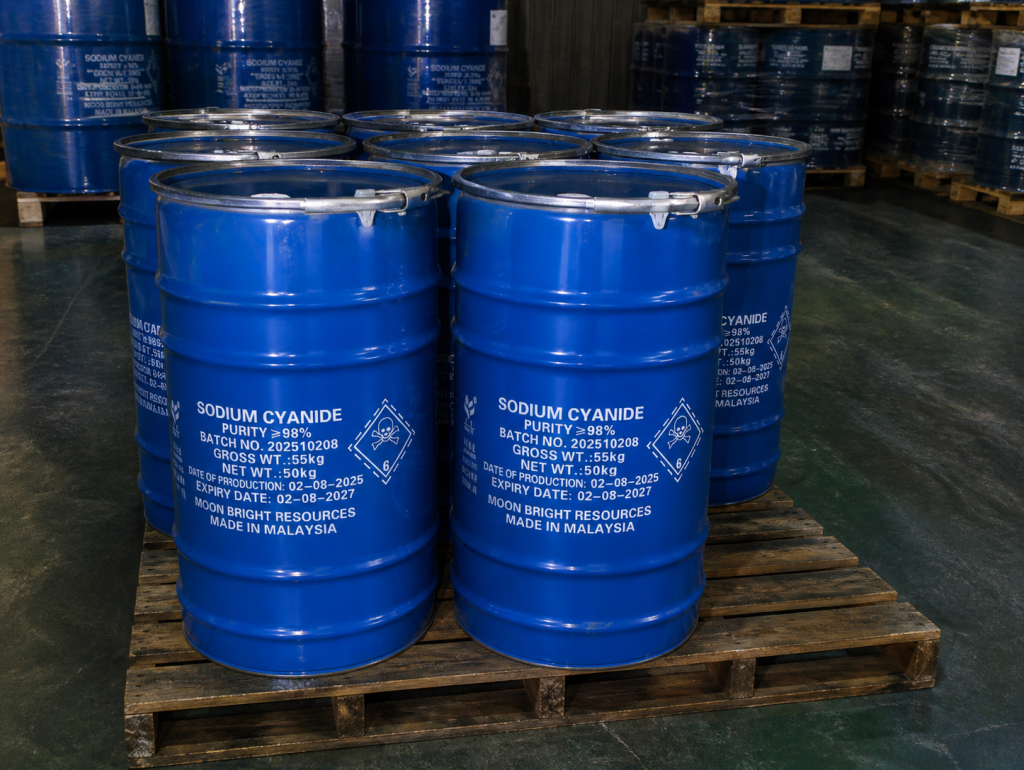

 English
  French
  Arabic
  Spanish
  Bulgarian