
What Is Granular Activated Carbon (GAC)?
Quick Answer
Granular Activated Carbon (GAC) is a highly porous adsorbent material manufactured from carbon-rich raw materials such as coconut shells, coal, or wood. Unlike powdered activated carbon (PAC), GAC consists of larger granules that are designed for use in fixed-bed filters, pressure vessels, gravity filtration systems, and industrial adsorption processes.
Because of its high surface area, extensive pore structure, and excellent mechanical strength, Granular Activated Carbon is widely used to remove chlorine, organic compounds, taste and odor-causing substances, volatile organic compounds (VOCs), and other contaminants from water, air, and industrial process streams.
GAC is commonly used in:
- Municipal drinking water treatment
- Industrial process water purification
- Wastewater treatment
- Food and beverage production
- Pharmaceutical manufacturing
- Chemical processing
- Gold recovery operations
- Air and gas purification systems
Selecting the correct GAC grade depends on factors such as raw material, particle size, pore structure, adsorption requirements, operating conditions, and system design.
Table of Contents
- What Is Granular Activated Carbon?
- How GAC Is Manufactured
- Physical and Chemical Properties
- Types of Granular Activated Carbon
- Coconut Shell vs Coal vs Wood-Based GAC
- Applications in Water Treatment
- Industrial Applications
- How to Select the Right GAC
- Quality Specifications and Testing
- Frequently Asked Questions
- Conclusion
What Is Granular Activated Carbon?
Granular Activated Carbon, often abbreviated as GAC, is one of the most widely used filtration and adsorption media in industrial and municipal treatment systems. It is produced by heating carbon-rich materials under controlled conditions and then activating them to create millions of microscopic pores throughout each granule.
These pores dramatically increase the available internal surface area, allowing contaminants to adhere to the carbon through adsorption. Depending on the raw material and activation process, a single gram of activated carbon can provide an enormous internal surface for adsorption, making GAC highly effective in a wide range of purification applications.
Unlike powdered activated carbon, which is dosed directly into a process and later removed, GAC remains inside a filter vessel or adsorption column, allowing water or gas to flow through the media repeatedly over an extended service life.
How Does Granular Activated Carbon Work?
Granular Activated Carbon works primarily through adsorption, a process in which dissolved or gaseous contaminants attach to the surface of the carbon rather than being absorbed into it.
As contaminated water or air passes through a GAC bed:
- Contaminants enter the pore network.
- Molecules adhere to the internal carbon surface.
- Cleaned water or air exits the filtration system.
- The carbon continues operating until its adsorption capacity is gradually exhausted.
When properly selected and maintained, GAC can provide reliable treatment performance over long operating cycles.
Why Granular Activated Carbon Is Widely Used
Several characteristics make GAC one of the most versatile adsorption media available:
- High adsorption capacity
- Excellent mechanical strength
- Low dust generation
- Good hydraulic performance
- Long service life
- Ability to be regenerated for certain applications
- Compatibility with many filtration system designs
- Availability in a wide range of particle sizes and grades
These properties have made GAC a standard choice for industrial water treatment, municipal filtration systems, and many environmental applications.
Common Raw Materials Used to Produce GAC
The performance of Granular Activated Carbon is influenced by the raw material used during manufacturing.
The three most common sources are:
Coconut Shell
Coconut shell activated carbon is known for:
- High hardness
- Low ash content
- Excellent micropore development
- Strong performance in drinking water and high-purity applications
Coal
Coal-based GAC generally provides:
- Balanced micro- and mesopore structure
- High adsorption capacity for a wide range of contaminants
- Broad industrial applicability
Wood
Wood-based activated carbon typically features:
- Greater mesopore and macropore volume
- Suitability for larger organic molecules
- Applications in certain liquid-phase and specialty processes
Each raw material offers different advantages depending on the intended application and contaminant profile.
Typical Industries That Use GAC
Granular Activated Carbon is used across numerous industries, including:
- Municipal water treatment
- Food and beverage processing
- Pharmaceutical manufacturing
- Chemical production
- Mining and metallurgy
- Electronics manufacturing
- Power generation
- Environmental remediation
- Aquaculture
- Air purification and gas treatment
Its versatility makes GAC one of the most widely specified adsorption media worldwide.
Why Procurement Teams Specify GAC
For procurement professionals, Granular Activated Carbon offers a combination of technical performance and operational reliability.
During supplier evaluation, buyers commonly review:
- Product specifications
- Technical Data Sheets (TDS)
- Certificates of Analysis (COA)
- Safety Data Sheets (SDS)
- Particle size distribution
- Iodine number
- Hardness
- Moisture content
- Packaging options
- Bulk supply capability
Reviewing these factors helps ensure that the selected product meets project requirements and supports consistent long-term performance.
💡 Expert Insight
Granular Activated Carbon is more than a filtration medium—it is a critical component of many industrial and environmental treatment systems. Selecting the appropriate GAC grade requires consideration of raw material, pore structure, particle size, operating conditions, and quality documentation. Understanding these factors enables engineers and procurement teams to choose products that deliver reliable performance and long service life.
How Granular Activated Carbon (GAC) Is Manufactured
The performance of Granular Activated Carbon (GAC) begins long before it enters a filtration vessel. Its adsorption capacity, pore structure, mechanical strength, and service life are all influenced by the manufacturing process.
Although production methods vary between manufacturers, the overall objective is the same: to transform a carbon-rich raw material into a highly porous adsorbent capable of removing contaminants from liquids and gases.
Understanding how GAC is manufactured helps buyers evaluate product quality, compare suppliers, and appreciate why activated carbon grades perform differently in specific applications.
Step 1: Selecting the Raw Material
The manufacturing process starts with a carefully selected carbon-rich raw material.
The most common sources include:
Coconut Shell
Coconut shell is widely used for premium grades of granular activated carbon because it naturally produces a dense carbon structure with excellent mechanical strength.
Typical advantages include:
- High hardness
- Low ash content
- Excellent micropore development
- Long operating life
- Low dust generation
These characteristics make coconut shell GAC especially suitable for drinking water treatment, food processing, pharmaceutical production, and other high-purity applications.
Coal
Coal-based activated carbon is produced from selected grades of bituminous or anthracite coal.
Advantages include:
- Balanced pore distribution
- Strong adsorption of a broad range of contaminants
- Good mechanical durability
- Wide industrial application
Coal-based GAC is commonly used in municipal water treatment, industrial wastewater treatment, and air purification systems.
Wood
Wood-based activated carbon generally develops a larger pore structure than coconut shell carbon.
Its characteristics include:
- Higher mesopore volume
- Larger macropore structure
- Effective adsorption of larger organic molecules
- Suitability for specialty industrial processes
The selection of raw material depends on the intended application and the contaminants that need to be removed.
Step 2: Carbonization
After preparation, the raw material undergoes carbonization, sometimes referred to as pyrolysis.
During this stage:
- The material is heated in a low-oxygen environment.
- Moisture and volatile compounds are removed.
- The remaining material becomes carbon-rich.
Carbonization creates the basic carbon framework that will later be activated to develop the internal pore network.
Step 3: Activation
Activation is the most important stage of the manufacturing process because it creates the microscopic pore structure responsible for adsorption.
Two principal activation methods are commonly used.
Steam Activation (Physical Activation)
Steam activation is widely used for producing granular activated carbon.
In this process:
- Carbonized material is heated to very high temperatures.
- Steam reacts with the carbon surface.
- Millions of microscopic pores develop throughout each granule.
Steam activation generally produces:
- Extensive internal surface area
- Well-developed pore networks
- Strong mechanical properties
- High adsorption performance
Many coconut shell and coal-based GAC products are manufactured using steam activation.
Chemical Activation
Some activated carbons are produced using chemical activating agents.
This method may be selected for particular raw materials or specialized applications.
Depending on the manufacturing process, chemical activation can influence:
- Pore development
- Surface chemistry
- Adsorption characteristics
The activation method selected by the manufacturer contributes to the final properties of the activated carbon.
Step 4: Screening and Particle Size Classification
Following activation, the carbon is screened to produce uniform particle sizes.
Common particle size ranges include:
- 8×30 mesh
- 8×16 mesh
- 12×40 mesh
- 20×50 mesh
Different particle sizes are selected depending on the filtration system, hydraulic requirements, and application.
Consistent particle sizing supports predictable flow characteristics and efficient operation.
Step 5: Washing (Where Required)
Some activated carbon grades undergo washing after activation.
The purpose may include:
- Reducing residual ash
- Removing fine particles
- Improving product cleanliness
- Meeting customer-specific requirements
Washing procedures vary depending on the intended application and product specification.
Step 6: Drying
Before packaging, the activated carbon is dried under controlled conditions.
Drying helps:
- Stabilize product moisture
- Improve storage stability
- Prepare the product for packaging and shipment
Moisture levels are typically verified as part of the manufacturer’s quality control process.
Step 7: Quality Control Testing
Before the product is released, manufacturers generally perform laboratory testing to verify compliance with product specifications.
Common evaluations include:
- Iodine Number
- Moisture Content
- Ash Content
- Hardness
- Apparent Density
- Particle Size Distribution
The results may be documented in a Certificate of Analysis (COA) for the specific production batch.
Step 8: Packaging and Distribution
After quality approval, the activated carbon is packaged for storage and shipment.
Common packaging options include:
- 25 kg bags
- 500 kg jumbo bags
- 1,000 kg bulk bags
- Bulk container shipments
Packaging selection depends on customer requirements, transportation methods, and intended use.
Factors That Influence Final Product Quality
Several variables affect the performance of finished granular activated carbon.
These include:
- Raw material quality
- Carbonization conditions
- Activation process
- Pore development
- Particle size consistency
- Quality control procedures
- Storage and packaging practices
Maintaining control over each stage of production helps manufacturers deliver consistent product quality from batch to batch.
Why Manufacturing Matters to Buyers
For procurement professionals, understanding the manufacturing process provides valuable context when comparing suppliers.
A well-controlled production process contributes to:
- Consistent product specifications
- Reliable laboratory results
- Better batch-to-batch consistency
- Longer media life
- Predictable operational performance
While buyers may not need to understand every technical detail of production, awareness of the key manufacturing stages supports more informed purchasing decisions.
Case Example: Choosing the Right Raw Material
A beverage manufacturer requires activated carbon for final polishing of process water. After reviewing product specifications and discussing application requirements with potential suppliers, the engineering team selects a coconut shell-based GAC because its high hardness and well-developed micropore structure align with the plant’s quality objectives and long operating cycles.
💡 Expert Insight
The manufacturing process determines far more than the appearance of granular activated carbon. Raw material selection, activation method, particle size control, and quality testing all influence adsorption performance, durability, and consistency. Buyers who understand these factors are better equipped to compare suppliers and choose products suited to their operational requirements.
Physical and Chemical Properties of Granular Activated Carbon (GAC)
The effectiveness of Granular Activated Carbon (GAC) depends on a combination of physical and chemical properties rather than a single specification. Engineers, procurement managers, and water treatment professionals evaluate these characteristics to determine whether a particular GAC grade is suitable for a specific application.
Properties such as pore structure, particle size, hardness, moisture content, and apparent density all influence adsorption performance, hydraulic behavior, service life, and operational efficiency.
Understanding these characteristics allows buyers to compare products more effectively and select activated carbon that aligns with project requirements.
Surface Area
One of the defining characteristics of activated carbon is its exceptionally large internal surface area.
Rather than existing on the outer surface of each granule, most of the available adsorption area is found inside an intricate network of microscopic pores.
This extensive internal structure allows activated carbon to capture and retain a wide range of dissolved or gaseous contaminants.
Although surface area is an important indicator, it should always be evaluated together with pore size distribution and application requirements.
Pore Structure
The adsorption performance of GAC depends heavily on its pore structure.
Activated carbon contains three primary pore categories:
Micropores
Micropores are the smallest pores and provide much of the adsorption capacity for low-molecular-weight contaminants.
Typical applications include:
- Drinking water treatment
- Chlorine removal
- Taste and odor control
- Organic compound adsorption
Mesopores
Mesopores are intermediate-sized pores that improve access to the internal adsorption surface.
They are particularly useful for:
- Larger organic molecules
- Industrial wastewater treatment
- Color removal
- Chemical processing
Macropores
Macropores function primarily as transport pathways.
Rather than serving as the main adsorption sites, they help contaminants move efficiently into the smaller pore network where adsorption occurs.
A balanced pore structure contributes to efficient contaminant removal and improved operational performance.
Particle Size
Granular Activated Carbon is available in a variety of particle sizes to suit different filtration systems.
Common mesh sizes include:
- 8×16
- 8×30
- 12×40
- 20×50
Particle size influences:
- Water flow
- Pressure drop
- Contact time
- Backwashing performance
- Media retention
Selecting the correct particle size helps optimize both treatment efficiency and hydraulic performance.
Hardness
Hardness measures the ability of activated carbon to resist abrasion during handling and operation.
Higher hardness contributes to:
- Reduced media loss
- Lower dust generation
- Longer operational life
- Improved resistance to repeated backwashing
Mechanical durability is particularly important in continuous filtration systems where the media is subjected to ongoing hydraulic stress.
Moisture Content
Activated carbon naturally retains a certain amount of moisture.
Moisture content influences:
- Shipping weight
- Inventory calculations
- Storage conditions
- Product handling
While moderate moisture levels are normal, procurement teams should review the reported value on the Certificate of Analysis to confirm consistency with the supplier’s specifications.
Ash Content
Ash represents the inorganic mineral residue remaining after the manufacturing process.
Monitoring ash content helps evaluate:
- Product purity
- Manufacturing consistency
- Available adsorption capacity
- Batch-to-batch quality
The acceptable ash level depends on the intended application and product grade.
Apparent Density
Apparent density describes the relationship between the mass of the activated carbon and the volume it occupies.
This property assists engineers when calculating:
- Filter bed volume
- Vessel loading
- Shipping quantities
- Inventory planning
Consistent apparent density contributes to predictable system design and operational planning.
Iodine Number
The iodine number is one of the most widely reported laboratory parameters for activated carbon.
It provides an indication of adsorption capacity for certain small organic molecules under standardized testing conditions.
While useful for product comparison, the iodine number should never be used as the sole criterion for selecting activated carbon.
A comprehensive evaluation should also consider pore structure, hardness, particle size, and application-specific requirements.
Mechanical Strength
Mechanical strength determines how well activated carbon withstands transportation, installation, and long-term operation.
Strong mechanical properties help:
- Maintain particle integrity
- Reduce fines generation
- Improve filter performance
- Extend service life
This property is especially valuable in systems that undergo frequent backwashing or continuous operation.
Hydraulic Performance
The physical characteristics of GAC directly affect hydraulic performance.
Important considerations include:
- Flow distribution
- Pressure loss
- Bed expansion during backwashing
- Contact time
- Operating efficiency
Engineers balance these factors when designing filtration systems to achieve effective contaminant removal without excessive pressure drop.
Chemical Stability
Activated carbon is valued for its chemical stability under a wide range of operating conditions.
Depending on the application, it can be used in:
- Potable water systems
- Industrial process water
- Wastewater treatment
- Air purification
- Chemical manufacturing
However, compatibility should always be evaluated against the specific process conditions and contaminants involved.
Why Properties Should Be Evaluated Together
No single specification determines the quality of granular activated carbon.
A complete evaluation considers the interaction between:
- Surface area
- Pore structure
- Particle size
- Hardness
- Moisture content
- Ash content
- Apparent density
- Intended application
This holistic approach helps engineers and procurement teams select products that deliver reliable long-term performance rather than relying on one headline value.
Comparing Product Specifications
Before approving a purchase, buyers should compare:
- Technical Data Sheet (TDS)
- Certificate of Analysis (COA)
- Project specifications
- Equipment requirements
- Application objectives
Reviewing these documents together provides a more complete picture of product suitability.
Case Example: Matching GAC Properties to a Water Treatment Project
A municipal water treatment plant is replacing the activated carbon media in its filtration system. The engineering team compares several GAC grades and evaluates not only the iodine number but also hardness, particle size distribution, apparent density, and pore structure. By selecting a product with properties that align with the plant’s hydraulic design and treatment objectives, the facility achieves stable filtration performance and extended media life.
💡 Expert Insight
The best Granular Activated Carbon is not simply the product with the highest specification in one category. Effective product selection requires balancing adsorption characteristics, mechanical durability, hydraulic behavior, and application requirements. Procurement teams that evaluate the complete technical profile are more likely to achieve reliable, long-term operating performance.
Types of Granular Activated Carbon (GAC)
Not all Granular Activated Carbon (GAC) is the same. Different grades are manufactured from different raw materials, produced using varying activation processes, and engineered with specific pore structures to meet the requirements of diverse industrial applications.
Selecting the correct GAC type is essential for achieving effective contaminant removal, operational efficiency, and long service life. Engineers and procurement teams should evaluate the intended application, contaminant profile, hydraulic conditions, and technical documentation before selecting a product.
Understanding the different types of GAC helps buyers compare products objectively rather than relying solely on product names or pricing.
Classification by Raw Material
One of the most common ways to classify granular activated carbon is by the raw material used during manufacturing.
The three primary categories are:
- Coconut Shell Granular Activated Carbon
- Coal-Based Granular Activated Carbon
- Wood-Based Granular Activated Carbon
Each raw material produces a unique pore structure and performance profile.
Coconut Shell Granular Activated Carbon
Coconut shell GAC is manufactured from carefully selected coconut shells through carbonization and activation.
It is recognized for its:
- High mechanical strength
- Excellent hardness
- Low ash content
- Well-developed micropore structure
- Long service life
- Low dust generation
These characteristics make coconut shell GAC particularly suitable for applications requiring high purity and reliable performance.
Typical Applications
- Drinking water treatment
- Bottled water production
- Food and beverage processing
- Pharmaceutical manufacturing
- Reverse osmosis pretreatment
- Residential water filtration
- Aquarium filtration
- Laboratory purification systems
Because of its durability and adsorption characteristics, coconut shell activated carbon is one of the most widely specified grades for water treatment.
Coal-Based Granular Activated Carbon
Coal-based GAC is produced from selected grades of coal and offers a balanced pore structure suitable for many industrial applications.
Typical characteristics include:
- Balanced micropore and mesopore distribution
- High adsorption capacity
- Strong mechanical durability
- Broad contaminant removal capability
Typical Applications
- Municipal drinking water
- Industrial wastewater
- Chemical processing
- Air purification
- VOC removal
- Solvent recovery
- Industrial filtration systems
Coal-based products are commonly selected where a broad adsorption profile is required.
Wood-Based Granular Activated Carbon
Wood-based activated carbon generally develops larger pore structures compared with coconut shell products.
Its characteristics include:
- Larger mesopores
- Greater macropore volume
- Efficient adsorption of larger organic molecules
- Lower bulk density (depending on grade)
Typical Applications
- Color removal
- Sugar refining
- Food processing
- Specialty chemical production
- Certain wastewater treatment processes
Wood-based GAC is often selected when contaminants consist of relatively large organic compounds.
Classification by Activation Method
Granular activated carbon may also be classified according to the activation process used during manufacturing.
Steam-Activated Carbon
Steam activation is the most widely used production method for granular activated carbon.
Advantages include:
- Extensive pore development
- High adsorption performance
- Strong mechanical properties
- Reliable product consistency
Steam activation is commonly used for coconut shell and coal-based GAC intended for industrial and municipal applications.
Chemically Activated Carbon
Chemical activation is used for certain raw materials and specialty products.
Depending on the manufacturing process, chemically activated carbon may exhibit:
- Different pore structures
- Modified surface chemistry
- Specialized adsorption characteristics
The activation method influences the final properties of the product and should be considered during supplier evaluation.
Classification by Particle Size
Granular Activated Carbon is available in a variety of mesh sizes to suit different equipment designs.
Common commercial sizes include:
- 8×16 mesh
- 8×30 mesh
- 12×40 mesh
- 20×50 mesh
Particle size selection affects:
- Hydraulic performance
- Contact time
- Pressure loss
- Backwashing behavior
- Media retention
Selecting the appropriate particle size helps optimize overall filtration efficiency.
Classification by Intended Application
Many suppliers classify GAC according to its primary use.
Examples include:
Water Treatment Grade
Designed for:
- Municipal drinking water
- Groundwater treatment
- Surface water treatment
- Process water purification
Food and Beverage Grade
Used in:
- Beverage production
- Brewing
- Distillation
- Sugar processing
- Ingredient purification
Pharmaceutical Grade
Applied in:
- Purified water systems
- Ingredient processing
- Laboratory applications
- Pharmaceutical manufacturing
Industrial Grade
Suitable for:
- Chemical processing
- Wastewater treatment
- Manufacturing operations
- Environmental remediation
Air and Gas Treatment Grade
Used for:
- Odor control
- VOC removal
- Air purification
- Gas treatment systems
- Industrial emissions control
Which Type of GAC Is Best?
There is no universally “best” granular activated carbon.
The optimal choice depends on factors such as:
- Target contaminants
- Water chemistry
- Process conditions
- Hydraulic design
- Service life expectations
- Regeneration requirements
- Regulatory requirements
- Budget considerations
Selecting the most appropriate product requires balancing these technical and operational factors rather than relying on a single specification.
Questions Buyers Should Ask
When comparing different GAC types, procurement teams should ask:
- Which raw material is used?
- Which activation method was employed?
- What is the recommended application?
- What particle sizes are available?
- Can the supplier provide a Technical Data Sheet?
- Is a batch-specific Certificate of Analysis available?
- What quality management procedures support production consistency?
- Is technical assistance available during product selection?
These questions support more informed supplier evaluations and help reduce procurement risk.
Working With Moon Bright Resources
Moon Bright Resources supplies activated carbon solutions for a variety of industrial and commercial applications.
Depending on customer requirements, we assist with:
- Product selection guidance
- Technical Data Sheets (TDS)
- Certificates of Analysis (COA), where applicable
- Product specifications
- Export documentation
- Technical support during procurement
Our objective is to help customers identify the activated carbon grade that best matches their application and operational requirements.
Case Example: Selecting the Right GAC for a Beverage Plant
A beverage manufacturer needs activated carbon to improve the quality of process water used in production. After evaluating several options, the engineering team selects a coconut shell granular activated carbon because of its high hardness, low ash content, and well-developed micropore structure. The supplier provides the Technical Data Sheet and a batch-specific Certificate of Analysis before shipment, allowing the procurement and quality assurance teams to verify compliance before the material is released for use.
💡 Expert Insight
Choosing the correct type of Granular Activated Carbon involves much more than selecting a raw material. Engineers and procurement professionals should evaluate pore structure, activation method, particle size, intended application, and supporting technical documentation together. A structured evaluation process helps ensure reliable treatment performance and long-term operational value.
Coconut Shell vs. Coal-Based vs. Wood-Based Granular Activated Carbon
Choosing the right Granular Activated Carbon (GAC) begins with selecting the most appropriate raw material. Although all activated carbons are designed to remove contaminants through adsorption, the source material used during manufacturing has a significant influence on pore structure, mechanical strength, adsorption behavior, and recommended applications.
The three most widely used raw materials are:
- Coconut Shell
- Coal
- Wood
Each offers distinct advantages depending on the treatment objectives and operating conditions.
Rather than asking which type is universally “best,” procurement teams should ask which type is best suited to their specific application.
Quick Comparison
| Property | Coconut Shell GAC | Coal-Based GAC | Wood-Based GAC |
|---|---|---|---|
| Raw Material | Coconut Shell | Bituminous/Anthracite Coal | Hardwood/Softwood |
| Micropore Development | Excellent | Very Good | Moderate |
| Mesopore Development | Moderate | Excellent | Excellent |
| Macropore Development | Limited | Good | Excellent |
| Hardness | Excellent | Very Good | Moderate |
| Ash Content | Generally Low | Moderate | Moderate |
| Mechanical Strength | Excellent | Very Good | Moderate |
| Drinking Water | Excellent | Excellent | Suitable for selected applications |
| Wastewater | Good | Excellent | Excellent |
| Color Removal | Good | Very Good | Excellent |
| Air & Gas Purification | Excellent | Excellent | Good |
The table above provides a general comparison. Actual product performance depends on the specific grade, manufacturing process, and application.
Coconut Shell Granular Activated Carbon
Coconut shell activated carbon is manufactured from natural coconut shells and is widely recognized for its durability and highly developed microporous structure.
Key Advantages
- High mechanical hardness
- Low ash content
- Low dust generation
- Long operational life
- Excellent resistance to abrasion
- Well-developed micropores
These characteristics make coconut shell GAC particularly effective for removing low-molecular-weight organic compounds commonly encountered in potable water treatment.
Common Applications
- Drinking water treatment
- Bottled water production
- Reverse osmosis pretreatment
- Beverage manufacturing
- Pharmaceutical water systems
- Aquarium filtration
- Residential water filters
Because of its durability, coconut shell GAC is often selected for systems requiring repeated backwashing and extended service intervals.
Coal-Based Granular Activated Carbon
Coal-based activated carbon offers a balanced pore structure containing both micropores and mesopores.
This balanced structure makes it suitable for a broad range of contaminants found in industrial and municipal treatment systems.
Key Advantages
- Wide adsorption spectrum
- Balanced pore distribution
- Strong mechanical durability
- Suitable for both liquid and gas applications
- Reliable long-term performance
Common Applications
- Municipal water treatment
- Industrial wastewater
- VOC removal
- Chemical processing
- Air purification
- Solvent recovery
- Industrial manufacturing
Coal-based GAC is often selected where treatment requirements involve contaminants of varying molecular sizes.
Wood-Based Granular Activated Carbon
Wood-based activated carbon generally contains a higher proportion of mesopores and macropores.
These larger pores improve access for relatively large organic molecules.
Key Advantages
- Large pore volume
- Excellent adsorption of high-molecular-weight compounds
- Effective color removal
- Suitable for specialty applications
Common Applications
- Sugar refining
- Food processing
- Dye removal
- Specialty chemical production
- Selected wastewater treatment applications
Wood-based GAC is commonly specified where larger dissolved organic compounds are the primary treatment concern.
Comparing Adsorption Characteristics
The internal pore structure influences which contaminants each activated carbon type is generally better suited to adsorb.
Coconut Shell
Typically performs well for:
- Taste and odor compounds
- Chlorine removal
- Small dissolved organics
- Drinking water polishing
Coal-Based
Typically performs well for:
- Mixed contaminant streams
- Industrial wastewater
- Organic solvents
- Municipal treatment systems
Wood-Based
Typically performs well for:
- Large organic molecules
- Color compounds
- Certain industrial process streams
- High-molecular-weight contaminants
Actual performance should always be confirmed through application testing and engineering evaluation.
Mechanical Durability Comparison
Mechanical durability affects media life, dust generation, and resistance to repeated hydraulic stress.
General comparison:
- Coconut Shell – Excellent
- Coal-Based – Very Good
- Wood-Based – Moderate
Higher mechanical strength generally contributes to:
- Lower media loss
- Longer replacement intervals
- Reduced maintenance
- Improved operational stability
Selecting the Right Carbon for Water Treatment
For potable water applications, engineers often prioritize:
- Product consistency
- Mechanical durability
- Low ash content
- Reliable adsorption performance
- Long service life
For these reasons, coconut shell GAC is frequently selected for drinking water and high-purity process water systems.
However, coal-based products may be preferred where a broader range of contaminants must be removed or where system design calls for different adsorption characteristics. Industrial Activated Carbon
Factors Procurement Teams Should Consider
When comparing activated carbon products, procurement decisions should include:
- Raw material
- Intended application
- Particle size
- Technical Data Sheet (TDS)
- Certificate of Analysis (COA)
- Mechanical properties
- Supplier documentation
- Quality assurance procedures
- Technical support
- Supply reliability
Price should be considered together with technical performance and long-term operating costs rather than as the sole purchasing criterion. Granular Activated Carbon Supplier
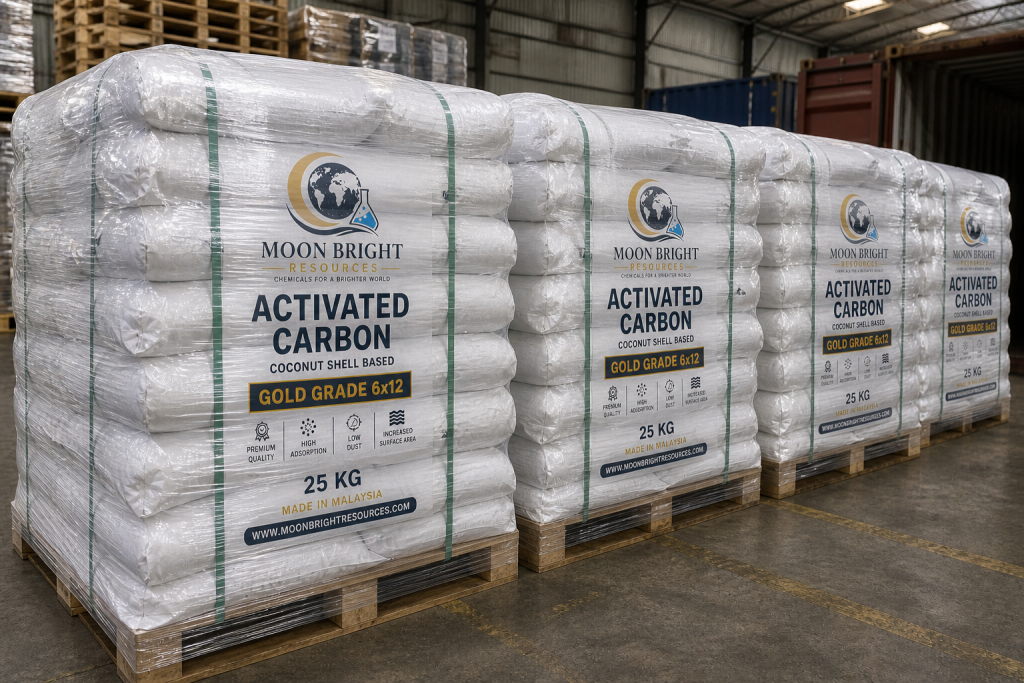
Working With Moon Bright Resources
Moon Bright Resources helps customers evaluate activated carbon grades based on project requirements rather than promoting a one-size-fits-all solution.
Our technical support process considers:
- Application objectives
- Water quality or process conditions
- Product specifications
- Available particle sizes
- Technical documentation
- Supply requirements
Where applicable, we provide:
- Technical Data Sheets (TDS)
- Certificates of Analysis (COA)
- Safety Data Sheets (SDS)
- Product specifications
- Export documentation
- Technical assistance during product selection
Case Example: Municipal Water Treatment Upgrade
A municipal utility is replacing the filtration media in several activated carbon filters. After reviewing the contaminant profile, operating conditions, and maintenance objectives, the engineering team compares coconut shell and coal-based GAC. Coconut shell media is selected because its high hardness and microporous structure align with the plant’s treatment goals and desired service life. The procurement team confirms the selection using the Technical Data Sheet and batch-specific Certificate of Analysis before approving the order.
💡 Expert Insight
No activated carbon raw material is universally superior. Coconut shell, coal-based, and wood-based GAC each offer unique advantages depending on contaminant type, operating conditions, and system design. The most successful procurement decisions are based on a combination of technical evaluation, laboratory documentation, and supplier support rather than raw material alone.
Granular Activated Carbon (GAC) for Water Treatment Applications
Water treatment is one of the largest and most important applications for Granular Activated Carbon (GAC) worldwide. Municipal utilities, industrial facilities, food and beverage manufacturers, pharmaceutical plants, and commercial operations rely on GAC to improve water quality by reducing a wide range of dissolved contaminants.
The effectiveness of GAC lies in its highly porous internal structure. As water passes through a properly designed activated carbon bed, contaminants are adsorbed onto the internal surface of the carbon granules, allowing treated water to exit with improved quality.
Because water chemistry varies from one application to another, selecting the correct grade of GAC requires careful evaluation of contaminant type, operating conditions, hydraulic design, and product specifications.
Why Granular Activated Carbon Is Used in Water Treatment
Granular Activated Carbon has become a standard treatment medium because it combines high adsorption capacity with mechanical durability and long operational life.
Key advantages include:
- Excellent adsorption performance
- Reliable hydraulic characteristics
- Low pressure loss when properly designed
- High mechanical strength
- Long service intervals
- Compatibility with pressure and gravity filtration systems
- Availability in multiple particle sizes and grades
These characteristics make GAC suitable for continuous operation in demanding industrial and municipal environments.
How GAC Removes Contaminants
Unlike conventional filtration, which primarily removes suspended particles, GAC works through adsorption.
As water flows through the carbon bed:
- Dissolved contaminants enter the pore network.
- Molecules adhere to the extensive internal surface area.
- Clean water continues through the filtration system.
- The adsorption capacity is gradually consumed over time until media replacement or regeneration is required.
This mechanism allows GAC to remove many contaminants that cannot be effectively captured by ordinary mechanical filters.
Common Water Treatment Applications
Municipal Drinking Water
Municipal treatment facilities commonly use GAC during the final polishing stages of water treatment.
Typical objectives include:
- Improving taste
- Reducing odor-causing compounds
- Removing residual chlorine
- Lowering concentrations of dissolved organic compounds
- Improving overall consumer water quality
Because of its durability and adsorption characteristics, coconut shell and selected coal-based GAC products are frequently specified for potable water systems.
Industrial Process Water
Many manufacturing facilities require high-quality water for production.
Industries include:
- Electronics
- Chemical processing
- Food manufacturing
- Beverage production
- Pharmaceutical manufacturing
- Textile processing
Activated carbon helps improve process consistency by reducing contaminants that could interfere with production or equipment performance.
Reverse Osmosis Pretreatment
Reverse osmosis (RO) membranes are sensitive to certain oxidizing agents, particularly free chlorine.
Granular Activated Carbon is often incorporated into pretreatment systems to reduce chlorine before water reaches the RO membranes, helping protect membrane performance and extend operating life.
The exact pretreatment design depends on feed water quality and system requirements.
Groundwater Treatment
Groundwater sources may contain naturally occurring compounds or contaminants introduced through industrial or agricultural activities.
GAC is commonly used as part of treatment systems designed to improve water quality before distribution or industrial use.
Surface Water Treatment
Surface water quality can vary significantly depending on seasonal conditions, rainfall, and watershed characteristics.
Activated carbon may be incorporated into treatment systems to support the removal of dissolved organic compounds, taste and odor-causing substances, and selected trace contaminants.
Wastewater Treatment
Industrial wastewater often contains complex mixtures of dissolved organic compounds.
Granular Activated Carbon is used in polishing stages where adsorption complements biological and physical treatment processes.
Applications include:
- Chemical manufacturing
- Pharmaceutical production
- Food processing
- Petrochemical facilities
- Environmental remediation
The suitability of GAC depends on wastewater composition and treatment objectives.
Typical Industries Using GAC for Water Treatment
Granular Activated Carbon is widely used across numerous sectors:
- Municipal utilities
- Food and beverage manufacturers
- Breweries
- Distilleries
- Pharmaceutical plants
- Chemical processing facilities
- Mining operations
- Power generation
- Electronics manufacturing
- Hospitality and commercial buildings
Each application may require a different activated carbon grade, particle size, or system configuration.
Factors That Influence Performance
Several operational variables affect the effectiveness of a GAC filtration system.
These include:
Contact Time
Adequate contact time allows contaminants to interact with the carbon surface.
Flow Rate
Excessive flow rates may reduce adsorption efficiency by decreasing contact time.
Water Temperature
Temperature influences adsorption behavior and should be considered during system design.
Water Chemistry
Parameters such as pH, dissolved organic matter, and competing contaminants may influence adsorption performance.
Carbon Properties
Performance is also affected by:
- Raw material
- Pore structure
- Particle size
- Hardness
- Surface chemistry
Selecting the appropriate carbon grade is therefore essential for achieving treatment objectives.
Monitoring GAC Performance
Routine monitoring helps determine when activated carbon is approaching the end of its useful service life.
Typical monitoring practices include:
- Water quality analysis
- Pressure drop measurements
- Flow monitoring
- Scheduled media inspections
- Laboratory testing where appropriate
Monitoring programs should be designed according to the specific treatment process and operational requirements.
Replacing or Regenerating GAC
Over time, adsorption sites become occupied and treatment efficiency gradually decreases.
Depending on the application, organizations may choose to:
- Replace the activated carbon with fresh media.
- Regenerate the carbon through approved thermal or specialized regeneration processes.
- Follow supplier recommendations for media management.
The most appropriate option depends on technical, economic, and regulatory considerations.
Selecting GAC for Water Treatment
Before selecting a product, engineers and procurement teams should evaluate:
- Source water characteristics
- Treatment objectives
- Target contaminants
- Hydraulic conditions
- Particle size requirements
- Technical Data Sheet (TDS)
- Certificate of Analysis (COA)
- Supplier quality documentation
- Available technical support
No single activated carbon grade is ideal for every water treatment application.
Working With Moon Bright Resources
Moon Bright Resources supports customers in identifying activated carbon solutions for municipal, commercial, and industrial water treatment projects.
Depending on project requirements, we provide:
- Technical Data Sheets (TDS)
- Batch-specific Certificates of Analysis (COA), where applicable
- Safety Data Sheets (SDS)
- Product specifications
- Technical assistance during product selection
- Export documentation for international shipments
Our goal is to help customers select activated carbon grades that align with their treatment objectives and procurement requirements.
Case Example: Beverage Production Facility
A beverage manufacturer upgrades its process water treatment system to improve product consistency. After evaluating several granular activated carbon grades, the engineering team selects a coconut shell-based GAC with high mechanical strength and a particle size compatible with the existing pressure vessels. Technical documentation, including the TDS and batch-specific COA, is reviewed before installation. The result is a reliable filtration system that supports consistent water quality for production.
💡 Expert Insight
Granular Activated Carbon is one of the most versatile treatment media available for water purification. However, successful performance depends on selecting the correct grade, designing the filtration system appropriately, and maintaining proper operating conditions. Procurement teams should evaluate technical documentation alongside engineering requirements to ensure the chosen product is suitable for its intended application.
Industrial Applications of Granular Activated Carbon (GAC)
Beyond water treatment, Granular Activated Carbon (GAC) is an essential material in many industrial processes. Its exceptional adsorption capacity, mechanical durability, and adaptable pore structure make it suitable for a wide range of applications involving liquid purification, gas treatment, environmental protection, and manufacturing.
From gold mining operations to pharmaceutical production, GAC helps improve product quality, protect equipment, recover valuable materials, and support environmental compliance.
Selecting the correct activated carbon grade depends on the specific process, contaminant profile, operating conditions, and performance objectives.
Food and Beverage Processing
The food and beverage industry relies on high-quality process water and purified ingredients to maintain product consistency.
Granular Activated Carbon is commonly used to:
- Improve process water quality
- Reduce taste and odor compounds
- Support beverage production
- Assist in ingredient purification
- Remove selected organic impurities
Typical industries include:
- Bottled water
- Breweries
- Distilleries
- Soft drink production
- Dairy processing
- Food ingredient manufacturing
For these applications, product consistency, low ash content, and reliable technical documentation are important considerations.
Pharmaceutical Manufacturing
Pharmaceutical facilities often require highly controlled water purification systems.
Granular Activated Carbon may be incorporated into treatment processes for:
- Purified water production
- Process water treatment
- Ingredient manufacturing
- Laboratory support systems
Engineers typically evaluate:
- Product specifications
- Technical Data Sheets (TDS)
- Certificates of Analysis (COA)
- Quality assurance documentation
- Batch traceability
These records support internal quality systems and regulatory compliance.
Chemical Processing
Chemical manufacturing processes frequently involve liquids or gases that require purification before, during, or after production.
Activated carbon may be used for:
- Removing organic contaminants
- Process purification
- Solvent recovery support
- Odor reduction
- Product polishing
The selection of GAC depends on compatibility with the specific process and target compounds.
Gold Mining and Precious Metal Recovery
Granular Activated Carbon plays a significant role in many gold recovery operations.
In carbon adsorption circuits, activated carbon is used to adsorb dissolved gold complexes from processing solutions before subsequent recovery stages.
Typical mining applications include:
- Carbon-in-Pulp (CIP) systems
- Carbon-in-Leach (CIL) systems
- Carbon-in-Column (CIC) systems
For mining applications, buyers often prioritize:
- High mechanical strength
- Resistance to abrasion
- Consistent particle size
- Reliable quality documentation
- Long operational life
Because mining environments are demanding, durable activated carbon grades are generally preferred.
Air and Gas Purification
Granular Activated Carbon is widely used in gas treatment systems where adsorption is required to reduce unwanted compounds.
Typical applications include:
- Industrial air purification
- Odor control systems
- VOC reduction
- Process gas treatment
- Commercial ventilation systems
The effectiveness of the carbon depends on the characteristics of the gas stream, operating conditions, and system design.
Industrial Wastewater Treatment
Many manufacturing facilities use GAC as part of wastewater polishing systems.
Industries include:
- Chemical plants
- Petrochemical facilities
- Textile manufacturers
- Food processing plants
- Pharmaceutical manufacturers
- Metal finishing operations
Activated carbon complements other treatment technologies by adsorbing dissolved organic compounds that remain after primary or biological treatment.
Power Generation
Power plants require high-quality water for boilers, cooling systems, and auxiliary processes.
Granular Activated Carbon may be used to support:
- Process water purification
- Pretreatment systems
- Condensate polishing support
- Equipment protection
Reliable water quality contributes to improved equipment performance and reduced maintenance.
Electronics Manufacturing
Electronics production often depends on highly purified water.
Activated carbon can form part of multi-stage purification systems designed to prepare feed water for:
- Semiconductor manufacturing
- Printed circuit board production
- Component cleaning
- Precision manufacturing
These industries place significant emphasis on product consistency and documentation.
Environmental Remediation
Environmental projects frequently use GAC to support the treatment of contaminated water or industrial emissions.
Applications may include:
- Groundwater remediation
- Site rehabilitation
- Industrial discharge treatment
- Environmental monitoring projects
The selected carbon grade should match the specific contaminants and treatment objectives.
Commercial and Institutional Facilities
Granular Activated Carbon is also used in a variety of commercial environments.
Examples include:
- Hotels
- Hospitals
- Universities
- Office buildings
- Shopping centers
- Recreational facilities
Applications typically involve water treatment, odor control, or air purification systems.
Selecting the Right GAC for Industrial Applications
Different industries prioritize different product characteristics.
Procurement teams should evaluate:
- Raw material
- Particle size
- Mechanical hardness
- Pore structure
- Product specifications
- Technical documentation
- Supplier experience
- Supply reliability
- Packaging options
Matching the activated carbon grade to the intended application helps optimize operational performance and reduce lifecycle costs.
Documentation for Industrial Procurement
Industrial buyers commonly request the following documentation before approving a purchase:
- Technical Data Sheet (TDS)
- Certificate of Analysis (COA)
- Safety Data Sheet (SDS)
- Product specifications
- Batch identification
- Export documentation (where applicable)
Reviewing these documents helps ensure the supplied product aligns with engineering and procurement requirements.
Working With Moon Bright Resources
Moon Bright Resources supplies activated carbon solutions for customers operating in a wide range of industries.
We support industrial procurement by providing:
- Technical product guidance
- Technical Data Sheets (TDS)
- Batch-specific Certificates of Analysis (COA), where applicable
- Safety Data Sheets (SDS)
- Export documentation
- Technical assistance during product selection
Our goal is to help customers identify activated carbon products that meet both technical and commercial requirements.
Case Example: Gold Recovery Operation
A mining company expands its carbon-in-leach circuit to increase gold recovery capacity. During supplier evaluation, the procurement team compares several activated carbon grades based on hardness, particle size distribution, abrasion resistance, and supporting documentation. After reviewing the Technical Data Sheet and Certificate of Analysis, the company selects a coconut shell-based GAC with properties suited to the demands of continuous mining operations, supporting efficient plant performance and reduced media loss.
💡 Expert Insight
Granular Activated Carbon is used in far more than water treatment. Its versatility allows it to support diverse industries ranging from food production and pharmaceuticals to mining, environmental remediation, and electronics manufacturing. The most effective product selection is based on a thorough understanding of the application, operating conditions, and supporting technical documentation rather than relying on a single specification.
How to Select the Right Granular Activated Carbon (GAC)
Choosing the right Granular Activated Carbon (GAC) involves more than comparing prices or selecting the product with the highest advertised specification. Every water treatment system, industrial process, and environmental application has unique operating conditions that influence the performance of activated carbon.
A successful selection process considers technical requirements, contaminant characteristics, operating conditions, documentation, and supplier capabilities together. Taking a structured approach helps organizations reduce procurement risk, improve operational efficiency, and maximize the service life of the carbon.
Step 1: Define Your Application
The first step is to clearly identify how the activated carbon will be used.
Common applications include:
- Drinking water treatment
- Industrial process water
- Wastewater treatment
- Reverse osmosis pretreatment
- Food and beverage production
- Pharmaceutical manufacturing
- Gold recovery (CIP, CIL, CIC)
- Air purification
- Chemical processing
Different applications require different pore structures, particle sizes, and performance characteristics.
Step 2: Identify the Target Contaminants
Activated carbon is designed to adsorb dissolved or gaseous contaminants, but not all contaminants behave the same way.
Examples include:
- Chlorine
- Taste and odor compounds
- Volatile Organic Compounds (VOCs)
- Organic solvents
- Color-causing substances
- Dissolved hydrocarbons
- Selected industrial chemicals
Understanding the contaminant profile helps engineers select an appropriate activated carbon grade.
Step 3: Evaluate the Raw Material
The raw material significantly influences adsorption behavior.
Coconut Shell GAC
Often selected for:
- Drinking water
- Beverage production
- Pharmaceutical applications
- High-purity water systems
Coal-Based GAC
Commonly used for:
- Municipal treatment
- Industrial wastewater
- Mixed contaminant streams
- Air purification
Wood-Based GAC
Often considered for:
- Color removal
- Larger organic molecules
- Specialty industrial processes
The best choice depends on the intended application rather than the raw material alone.
Step 4: Select the Appropriate Particle Size
Particle size affects:
- Contact time
- Hydraulic performance
- Pressure drop
- Backwashing behavior
- Media retention
Common mesh sizes include:
- 8×16
- 8×30
- 12×40
- 20×50
The appropriate size should match the design of the filtration or adsorption system.
Step 5: Review Technical Specifications
Before purchasing, review the supplier’s Technical Data Sheet (TDS).
Important properties include:
- Iodine Number
- Hardness
- Moisture Content
- Ash Content
- Apparent Density
- Particle Size Distribution
Rather than focusing on a single value, evaluate the complete technical profile.
Step 6: Request a Certificate of Analysis (COA)
A Certificate of Analysis (COA) confirms the measured laboratory results for the production batch being supplied.
A professional COA should include:
- Product identification
- Batch number
- Laboratory test results
- Units of measurement
- Issue date
- Quality approval
Comparing the COA with the TDS helps verify product consistency.
Step 7: Confirm Regulatory and Documentation Requirements
Many projects require additional documentation.
Depending on the application, buyers may request:
- Technical Data Sheet (TDS)
- Certificate of Analysis (COA)
- Safety Data Sheet (SDS)
- Certificate of Origin
- Export documentation
- Product specification sheet
Defining these requirements during the RFQ stage helps prevent delays.
Step 8: Assess Supplier Capabilities
The quality of the supplier is just as important as the quality of the product.
Evaluate factors such as:
- Technical expertise
- Product consistency
- Documentation quality
- Communication
- Export experience
- Packaging options
- Delivery performance
- Customer support
Long-term supplier relationships often deliver greater value than selecting the lowest initial purchase price.
Step 9: Consider Total Cost of Ownership
The purchase price represents only one part of the overall cost.
Other considerations include:
- Media service life
- Replacement frequency
- Shipping costs
- Downtime during media changes
- Disposal or regeneration costs
- Operational efficiency
- Maintenance requirements
A higher-quality activated carbon may reduce lifecycle costs through longer service intervals and more consistent performance.
Step 10: Conduct a Technical Review
Before approving the purchase, the engineering and procurement teams should jointly review:
- Application requirements
- Product specifications
- TDS
- COA
- Supplier qualifications
- Packaging
- Delivery schedule
Collaborative evaluation helps reduce procurement errors and supports successful implementation.
Procurement Checklist
Before issuing a purchase order, verify:
✅ Application has been clearly defined.
✅ Target contaminants have been identified.
✅ Appropriate raw material has been selected.
✅ Particle size matches equipment requirements.
✅ Technical Data Sheet reviewed.
✅ Certificate of Analysis requested.
✅ Safety Data Sheet available.
✅ Supplier qualifications evaluated.
✅ Delivery schedule confirmed.
✅ Packaging requirements verified.
Common Buying Mistakes
Avoid these common procurement errors:
- Selecting carbon based only on price.
- Ignoring particle size compatibility.
- Failing to request a batch-specific COA.
- Comparing products using only the iodine number.
- Overlooking hydraulic design requirements.
- Purchasing without reviewing the TDS.
- Choosing a supplier without evaluating documentation quality.
- Not confirming packaging and shipping requirements.
A structured procurement process minimizes these risks.
Working With Moon Bright Resources
Moon Bright Resources supports customers throughout the activated carbon selection process.
Our team can assist with:
- Product recommendations
- Technical Data Sheets (TDS)
- Batch-specific Certificates of Analysis (COA)
- Safety Data Sheets (SDS)
- Product specifications
- Packaging options
- Export documentation
- Technical assistance before purchase
By understanding your application and operational objectives, we can recommend activated carbon grades that align with your project requirements.
Case Example: Industrial Procurement Review
An engineering contractor is sourcing GAC for a new wastewater treatment facility. Instead of selecting the lowest-priced product, the procurement team compares multiple suppliers based on technical specifications, particle size distribution, documentation quality, packaging options, and delivery capability. After reviewing the TDS and COA, the team selects a supplier that offers consistent technical support and reliable batch documentation, contributing to a smoother commissioning process and dependable long-term operation.
💡 Expert Insight
Selecting Granular Activated Carbon should be treated as an engineering and procurement decision—not simply a purchasing transaction. The most successful projects evaluate application requirements, technical documentation, supplier capabilities, and lifecycle costs together. This comprehensive approach helps organizations achieve better treatment performance, improved reliability, and stronger long-term value.
Granular Activated Carbon Quality Specifications and Testing Methods
The performance of Granular Activated Carbon (GAC) depends not only on raw materials and manufacturing processes, but also on consistent quality control and laboratory testing.
Manufacturers use a variety of standardized tests to evaluate activated carbon before it is released for commercial use. These tests help engineers, procurement teams, and quality assurance professionals compare products, verify supplier claims, and confirm that the delivered material aligns with project specifications.
Understanding how activated carbon is tested provides buyers with a stronger basis for evaluating suppliers and making informed purchasing decisions.
Why Quality Testing Matters
Activated carbon is used in applications where treatment efficiency, product quality, and operational reliability are important.
Examples include:
- Municipal drinking water
- Food and beverage production
- Pharmaceutical manufacturing
- Chemical processing
- Mining operations
- Air purification systems
- Wastewater treatment
Consistent testing helps ensure that activated carbon meets the required specifications before shipment.
Common Quality Parameters
Several laboratory measurements are commonly used to characterize Granular Activated Carbon.
Iodine Number
The iodine number is one of the most widely reported activated carbon specifications.
It provides an indication of adsorption capacity for certain small organic molecules under standardized conditions.
The iodine number is commonly used:
- For product comparison
- During quality control
- As part of technical specifications
However, iodine number should not be used alone when selecting activated carbon.
Other factors such as pore structure, hardness, and particle size must also be considered.
Hardness Number
Hardness indicates the carbon’s resistance to abrasion and mechanical wear.
Higher hardness generally contributes to:
- Lower media loss
- Reduced dust formation
- Longer operating life
- Improved resistance to backwashing
This parameter is particularly important for systems operating continuously over long periods.
Moisture Content
Activated carbon naturally contains moisture.
Moisture content affects:
- Product handling
- Shipping weight
- Storage conditions
- Inventory calculations
Moisture levels are usually included in the Technical Data Sheet and Certificate of Analysis.
Ash Content
Ash represents inorganic mineral residue remaining after activation.
Monitoring ash content helps evaluate:
- Product purity
- Manufacturing consistency
- Available adsorption capacity
The acceptable ash level depends on the intended application.
Particle Size Distribution
Particle size affects:
- Flow characteristics
- Pressure drop
- Contact time
- Media retention
Manufacturers typically classify GAC using mesh sizes such as:
- 8×16
- 8×30
- 12×40
- 20×50
Consistent particle size supports predictable system performance.
Apparent Density
Apparent density is used in:
- Filter design
- Inventory planning
- Vessel loading calculations
- Shipping estimates
Consistent density improves engineering calculations and operational planning.
Quality Testing Standards
Activated carbon testing may be performed according to recognized standards developed by industry organizations.
Common references include:
- ASTM standards
- AWWA guidelines
- Internal manufacturer procedures
- Customer-specific specifications
Testing methods may vary between manufacturers, so procurement teams should review technical documentation carefully.
The Role of the Technical Data Sheet (TDS)
The Technical Data Sheet provides the standard product specifications for a particular activated carbon grade.
Typical information includes:
- Product description
- Raw material
- Particle size
- Iodine number
- Hardness
- Moisture content
- Ash content
- Apparent density
The TDS helps buyers compare products before purchase.
The Role of the Certificate of Analysis (COA)
A Certificate of Analysis provides batch-specific laboratory results.
A COA commonly includes:
- Product identification
- Batch number
- Measured test values
- Date of issue
- Quality approval
Comparing the COA with the TDS helps verify consistency between the delivered product and the supplier’s published specifications.
Batch Traceability
Batch traceability allows manufacturers and customers to identify the origin and testing history of a specific production batch.
Benefits include:
- Improved quality control
- Supplier evaluation
- Internal audits
- Documentation management
- Product investigation support
Traceability is particularly important in regulated industries.
How Procurement Teams Evaluate Quality
Industrial buyers often review:
- Technical Data Sheet
- Certificate of Analysis
- Product specifications
- Supplier documentation
- Quality management systems
- Historical performance
This broader evaluation provides a more complete understanding than reviewing a single specification alone.
Questions to Ask Suppliers
Before purchasing, buyers may ask:
- What testing methods are used?
- Is a batch-specific COA available?
- Which quality parameters are routinely monitored?
- Can historical COAs be provided?
- How is batch traceability maintained?
- What quality management systems support production?
These questions help establish confidence in supplier capabilities.
Documentation Checklist
Before shipment approval, verify that the following documents are available:
✅ Technical Data Sheet (TDS)
✅ Certificate of Analysis (COA)
✅ Safety Data Sheet (SDS)
✅ Product specification sheet
✅ Batch identification
✅ Commercial documents
Working With Moon Bright Resources
Moon Bright Resources supports customers by providing technical documentation and product information to assist procurement and engineering decisions.
Depending on customer requirements, available documentation may include:
- Technical Data Sheets (TDS)
- Batch-specific Certificates of Analysis (COA)
- Safety Data Sheets (SDS)
- Product specifications
- Export documentation
Our objective is to support transparent procurement and reliable product selection.
Case Example: Supplier Qualification
An industrial manufacturer compares multiple activated carbon suppliers before approving a long-term supply agreement. The evaluation includes review of Technical Data Sheets, batch-specific Certificates of Analysis, testing methods, and documentation practices. The supplier that provides clear specifications, consistent laboratory results, and reliable technical support is selected for the project.
💡 Expert Insight
Activated carbon quality cannot be evaluated through a single number. Effective product selection requires reviewing specifications, testing methods, quality documentation, and supplier capabilities together. Procurement teams that use a structured evaluation process are better positioned to achieve reliable long-term performance.
Frequently Asked Questions (FAQs) About Granular Activated Carbon (GAC)
1. What is Granular Activated Carbon (GAC)?
Granular Activated Carbon (GAC) is a porous adsorbent material manufactured from carbon-rich raw materials such as coconut shells, coal, or wood. It is widely used in water treatment, air purification, chemical processing, food production, mining, and many other industrial applications because of its ability to adsorb dissolved and gaseous contaminants.
Unlike powdered activated carbon (PAC), GAC consists of durable granules that remain inside filtration vessels or adsorption columns for extended operating periods.
2. How does Granular Activated Carbon work?
Granular Activated Carbon removes contaminants through adsorption.
As water or gas passes through the carbon bed:
- Contaminants enter the pore network.
- Molecules adhere to the extensive internal surface area.
- Purified water or gas exits the system.
The adsorption capacity gradually decreases as the available pore surfaces become occupied.
3. What is the difference between GAC and PAC?
The primary difference is particle size and application.
| Granular Activated Carbon (GAC) | Powdered Activated Carbon (PAC) |
|---|---|
| Larger granules | Fine powder |
| Used in fixed filtration beds | Added directly to treatment processes |
| Longer service life | Generally single-use within the treatment process |
| Easier to remove and replace | Removed along with process sludge or filtration residues |
The appropriate choice depends on the treatment process and system design.
4. Which raw material is best for activated carbon?
There is no single best raw material.
Each has advantages:
Coconut Shell
- High hardness
- Low ash
- Excellent micropores
- Drinking water applications
Coal-Based
- Balanced pore structure
- Broad industrial applications
- Municipal water treatment
Wood-Based
- Larger pore structure
- Color removal
- Large organic molecules
The optimal selection depends on the contaminants and operating conditions.
5. What contaminants can GAC remove?
Depending on system design and operating conditions, GAC is commonly used to reduce:
- Taste and odor compounds
- Residual chlorine
- Volatile Organic Compounds (VOCs)
- Certain dissolved organic compounds
- Some industrial chemicals
- Selected color-causing substances
Actual removal performance depends on water chemistry, contact time, carbon grade, and system design.
6. How long does Granular Activated Carbon last?
Service life varies considerably.
Factors influencing replacement intervals include:
- Water quality
- Contaminant concentration
- Flow rate
- Contact time
- Carbon grade
- Operating conditions
- Maintenance practices
Rather than replacing media on a fixed schedule, many facilities monitor water quality and system performance to determine when replacement or regeneration is appropriate.
7. Can Granular Activated Carbon be regenerated?
Yes. In some industrial applications, spent activated carbon may be regenerated using specialized thermal or other approved regeneration processes.
Whether regeneration is practical depends on:
- Application
- Type of contaminants
- Carbon condition
- Economic considerations
- Regulatory requirements
Not all activated carbon is suitable for regeneration.
8. Is GAC safe for drinking water treatment?
Many grades of Granular Activated Carbon are used in drinking water treatment systems.
However, suitability depends on:
- Product quality
- Manufacturing controls
- Applicable certifications
- Regulatory requirements
- System design
Buyers should confirm that the selected product is appropriate for its intended use and complies with relevant local regulations and project specifications.
9. What is the iodine number?
The iodine number is a laboratory measurement commonly used to indicate adsorption capacity for certain small organic molecules.
It is useful for product comparison but should not be used as the sole criterion when selecting activated carbon.
Other factors—including pore structure, hardness, particle size, and application requirements—must also be evaluated.
10. Why are the TDS and COA important?
These documents serve different purposes:
Technical Data Sheet (TDS)
Provides the standard specifications for the activated carbon product.
Certificate of Analysis (COA)
Provides the measured laboratory results for the specific production batch.
Reviewing both documents together helps verify product consistency before shipment approval.
11. How do I choose the right Granular Activated Carbon?
Important considerations include:
- Application
- Target contaminants
- Raw material
- Particle size
- Technical specifications
- Technical Data Sheet
- Certificate of Analysis
- Supplier experience
- Documentation quality
Selecting activated carbon should involve both engineering and procurement teams.
12. Does a higher iodine number always mean better activated carbon?
No.
Although iodine number is an important quality indicator, overall performance also depends on:
- Pore size distribution
- Surface chemistry
- Mechanical hardness
- Particle size
- Hydraulic conditions
- Operating environment
Selecting activated carbon based solely on iodine number may not produce the best results.
13. What documents should accompany an activated carbon shipment?
Industrial buyers commonly request:
- Technical Data Sheet (TDS)
- Certificate of Analysis (COA)
- Safety Data Sheet (SDS)
- Packing List
- Commercial Invoice
- Certificate of Origin (where required)
- Export documentation
Documentation requirements vary according to project specifications and destination country.
14. What industries use Granular Activated Carbon?
GAC is widely used in:
- Municipal water treatment
- Food and beverage manufacturing
- Pharmaceutical production
- Chemical processing
- Gold mining
- Air purification
- Environmental remediation
- Wastewater treatment
- Electronics manufacturing
- Hospitality and commercial facilities
15. What should I consider when choosing an activated carbon supplier?
Important evaluation criteria include:
- Product quality
- Technical documentation
- Batch consistency
- Quality management systems
- Technical support
- Export capability
- Delivery performance
- Industry experience
A supplier that provides complete documentation and responsive technical support can help simplify procurement and improve project outcomes.
16. Why choose Moon Bright Resources?
Moon Bright Resources supports industrial customers by providing activated carbon solutions together with technical documentation and procurement assistance.
Depending on customer requirements, support may include:
- Product selection guidance
- Technical Data Sheets (TDS)
- Batch-specific Certificates of Analysis (COA)
- Safety Data Sheets (SDS)
- Product specifications
- Export documentation
- Technical assistance throughout the procurement process
Our focus is on helping customers select activated carbon products that align with their technical, operational, and commercial requirements.
Quick Buyer Checklist
Before placing an order for Granular Activated Carbon, confirm:
- ✔ The application has been clearly defined.
- ✔ Target contaminants have been identified.
- ✔ The appropriate raw material has been selected.
- ✔ Particle size matches the system design.
- ✔ The Technical Data Sheet has been reviewed.
- ✔ A batch-specific COA has been requested.
- ✔ Required documentation is available.
- ✔ Supplier capabilities have been evaluated.
- ✔ Packaging and logistics requirements have been confirmed.
💡 Expert Insight
The most successful activated carbon projects begin with the right questions. Understanding how GAC works, how it is tested, and how it should be selected helps procurement teams and engineers reduce risk, improve treatment performance, and establish long-term supplier relationships based on quality and transparency.
Conclusion – Selecting the Right Granular Activated Carbon for Long-Term Performance
Granular Activated Carbon (GAC) has become one of the most widely used adsorption media across municipal water treatment, industrial manufacturing, environmental remediation, food and beverage production, pharmaceutical processing, mining, and air purification. Its ability to remove a broad range of contaminants through adsorption makes it an essential component of many treatment systems worldwide.
However, successful performance depends on much more than purchasing activated carbon with the highest advertised specification. Selecting the right GAC requires a balanced evaluation of raw material, pore structure, particle size, mechanical strength, technical documentation, and supplier reliability.
Throughout this guide, we have explored the factors that influence activated carbon performance, including manufacturing methods, physical and chemical properties, quality testing, application-specific requirements, and procurement best practices. Understanding these topics enables engineers, procurement teams, and facility managers to make informed purchasing decisions that support reliable operation and long-term value.
Granular Activated Carbon Is an Engineering Solution
Although activated carbon is often viewed as a filtration medium, it is more accurately described as an engineered adsorption material.
Its effectiveness depends on how well the product characteristics align with the intended application.
For example:
- A municipal water treatment plant may prioritize low ash content, high hardness, and consistent particle size.
- A food processing facility may require activated carbon supported by comprehensive quality documentation.
- A mining operation may focus on abrasion resistance and long service life within carbon adsorption circuits.
- An industrial manufacturer may prioritize adsorption performance for specific organic compounds.
These differences illustrate why there is no universal “best” activated carbon. The optimal solution is the one that best fits the operational requirements of the project.
The Importance of Technical Documentation
Reliable technical documentation is a critical part of the procurement process.
Industrial buyers should request and review:
- Technical Data Sheets (TDS)
- Batch-specific Certificates of Analysis (COA)
- Safety Data Sheets (SDS)
- Product specifications
- Export documentation (where applicable)
Reviewing these documents together provides greater confidence that the supplied product aligns with project specifications and quality expectations.
Procurement Is About More Than Price
While pricing remains an important consideration, long-term project success is influenced by a broader range of factors.
Procurement teams should also evaluate:
- Product consistency
- Manufacturing quality
- Batch traceability
- Supplier technical support
- Packaging options
- Export capabilities
- Delivery reliability
- Documentation quality
Considering the total cost of ownership—including service life, maintenance requirements, and operational efficiency—often provides a more accurate assessment of value than comparing purchase prices alone.
Building Long-Term Supplier Relationships
Organizations that establish strong supplier partnerships often benefit from:
- Consistent product quality
- Reliable technical support
- Improved communication
- Faster response to project requirements
- Better documentation management
- Greater supply chain stability
Working with suppliers that understand industrial applications and maintain transparent quality systems helps reduce procurement risk and improve long-term operational performance.
Why Choose Moon Bright Resources?
Moon Bright Resources supplies activated carbon solutions for customers operating across a wide range of industries, including:
- Municipal water treatment
- Industrial manufacturing
- Food and beverage processing
- Pharmaceutical production
- Chemical processing
- Mining and metallurgy
- Environmental remediation
- Air purification
To support procurement and engineering teams, we provide:
- Technical product guidance
- Technical Data Sheets (TDS)
- Batch-specific Certificates of Analysis (COA), where applicable
- Safety Data Sheets (SDS)
- Product specifications
- Export documentation
- Packaging options for international shipments
- Technical assistance during product selection
Our objective is to help customers select activated carbon products that meet both technical requirements and commercial objectives while maintaining transparency throughout the procurement process.
Request Technical Information or a Quotation
If your organization is planning a new filtration project or replacing existing activated carbon media, selecting the correct product begins with understanding your process requirements.
When requesting a quotation, providing the following information can help ensure accurate product recommendations:
- Intended application
- Water or process characteristics
- Target contaminants
- Preferred raw material (if applicable)
- Required particle size
- Quantity required
- Packaging preference
- Destination country
- Documentation requirements (TDS, COA, SDS, etc.)
Providing complete project information enables faster technical evaluation and more accurate quotations.
Final Takeaway
Granular Activated Carbon remains one of the most effective and versatile adsorption media available for industrial and commercial treatment systems. Whether the application involves drinking water purification, wastewater treatment, food production, pharmaceutical manufacturing, gold recovery, or air purification, selecting the appropriate GAC grade requires careful consideration of technical specifications, operating conditions, and supplier capabilities.
By combining sound engineering practices with structured procurement procedures, organizations can improve treatment performance, reduce operational risk, and build long-term confidence in their activated carbon supply chain.
Key Takeaways
- Granular Activated Carbon is used across numerous industrial, municipal, and commercial applications.
- Product performance depends on raw material, pore structure, particle size, mechanical properties, and application requirements.
- Technical documentation—including the TDS, COA, and SDS—should be reviewed before purchase.
- Supplier expertise, product consistency, and documentation quality are important procurement considerations.
- A structured evaluation process helps maximize operational efficiency and long-term value.
Contact Moon Bright Resources
For technical assistance, product availability, or a quotation for Granular Activated Carbon, contact the Moon Bright Resources team. We are committed to supporting industrial customers with dependable activated carbon products, comprehensive technical documentation, and responsive customer service for projects worldwide.

 English
  French
  Arabic
  Spanish
  Bulgarian