

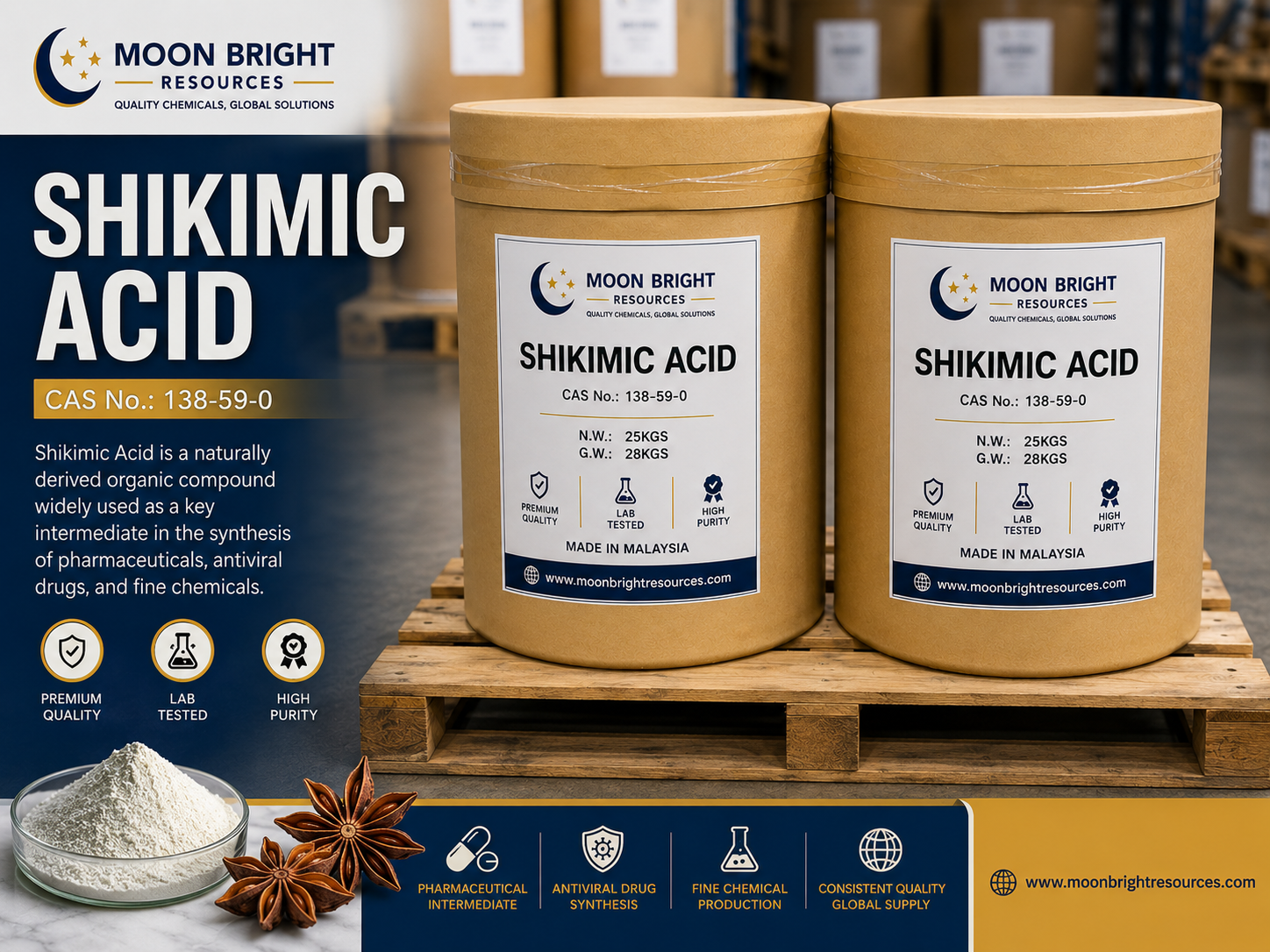

Shikimic Acid (C₇H₁₀O₅) is a naturally occurring cyclohexene carboxylic acid and key intermediate in the shikimate pathway — a seven-step metabolic route used by plants and microorganisms to synthesize aromatic amino acids (phenylalanine, tyrosine, tryptophan). It is most abundantly extracted from the fruit of Chinese star anise (Illicium verum), though production via microbial fermentation is also available.
Moon Bright Resources supplies high-purity shikimic acid with 98-99% purity, manufactured through controlled extraction and purification processes. Our product is the critical starting material for the synthesis of oseltamivir phosphate (Tamiflu®), an antiviral medication used to treat and prevent influenza A and B. Beyond pharmaceuticals, shikimic acid is gaining recognition in cosmetic formulations for its anti-inflammatory, antioxidant, and skin-brightening properties. We offer flexible packaging from laboratory quantities to commercial drums, with full documentation including Certificate of Analysis, residual solvent profile, and botanical origin traceability. shikimic acid API bulk price
Characteristics & Specifications
| Parameter | Pharmaceutical Grade | Cosmetic Grade |
|---|---|---|
| Purity (HPLC) | 99.0% minimum | 98.0% minimum |
| Appearance | White to off-white crystalline powder | White to off-white powder |
| CAS Number | 138-59-0 | |
| Molecular Formula | C₇H₁₀O₅ | |
| Molecular Weight | 174.15 g/mol | |
| Melting Point | 185-187°C | 183-186°C |
| Specific Rotation [α]₂₀ᴅ | -180° to -200° (c=1, H₂O) | -175° to -200° (c=1, H₂O) |
| Loss on Drying | ≤ 1.0% | ≤ 2.0% |
| Residue on Ignition | ≤ 0.2% | ≤ 0.5% |
| Heavy Metals (as Pb) | ≤ 10 ppm | ≤ 20 ppm |
| Arsenic (As) | ≤ 1 ppm | ≤ 2 ppm |
| Residual Solvents | Meets ICH Q3C | – |
| Pesticide Residues | Meets USP <561> | – |
| Source | Star anise (Illicium verum) or fermentation | Star anise or fermentation |
| Standards Met | In-house Pharmaceutical Specification, USP (upon request) | Cosmetic Grade |
Key Applications & Benefits
| Application | Role/Mechanism |
|---|---|
| Antiviral Pharmaceutical API | Key starting material for oseltamivir phosphate (Tamiflu®); inhibits influenza neuraminidase |
| Cosmetic Anti-Aging | Inhibits collagenase and elastase; reduces MMP-1 expression; protects against UV-induced aging |
| Anti-Inflammatory Skincare | Reduces pro-inflammatory cytokines (IL-6, TNF-α); calms redness and irritation |
| Skin Brightening | Tyrosinase inhibition; reduces melanin production; helps fade hyperpigmentation |
| Antioxidant Protection | Scavenges free radicals; protects skin cells from oxidative stress |
| Acne Treatment | Anti-bacterial and anti-inflammatory properties; reduces acne lesions |
| Hair Care | Promotes scalp health; reduces dandruff-associated inflammation |
Shikimic Acid Pathway in Nature
Glucose → Phosphoenolpyruvate + Erythrose-4-phosphate → 3-Dehydroquinate → Shikimic Acid → Chorismate → Phenylalanine / Tyrosine / Tryptophan
-
Pharmaceutical Manufacturing: Key starting material (intermediate) for oseltamivir phosphate (Tamiflu®) and other neuraminidase inhibitors
-
Cosmetic & Skincare: Anti-aging serums, anti-inflammatory creams, skin brightening formulations
-
Research & Development: Biochemical research, metabolic pathway studies
-
Functional Foods: Dietary supplements (limited applications, consult regulatory guidelines)
-
Agricultural: Precursor for herbicide glyphosate (technical grade available)
Dosage Recommendations for Cosmetics
| Application Type | Recommended Usage |
|---|---|
| Anti-aging serums | 0.5-1.0% |
| Calming/anti-inflammatory creams | 0.3-0.8% |
| Skin brightening formulations | 0.5-1.0% |
| Acne treatment products | 0.5-1.0% |
| Eye creams | 0.3-0.5% |
Packaging Options
-
1 kg aluminum foil bag with PE inner liner
-
5 kg HDPE drum with double PE liner
-
10 kg HDPE drum
-
20 kg HDPE drum
-
25 kg fiber drum
-
Custom OEM packaging available
FAQ – Frequently Asked Questions
Q1: Is shikimic acid only extracted from star anise?
A1: Historically, shikimic acid was extracted primarily from Chinese star anise (Illicium verum), which remains a significant source. However, due to supply constraints and price volatility, most pharmaceutical-grade shikimic acid today is produced through microbial fermentation using engineered E. coli or other microorganisms. Fermentation-derived material is equivalent in purity and performance to plant-extracted material, often with lower heavy metal and pesticide residues. We can supply both sources based on customer preference and regulatory requirements. buy shikimic acid bulk
Q2: Is shikimic acid safe for use in cosmetics?
A2: Yes, shikimic acid is considered safe for topical cosmetic use at recommended concentrations (typically 0.3-1.0%). It is naturally occurring, non-toxic, and non-irritating when properly formulated. Multiple studies have demonstrated its anti-inflammatory, antioxidant, and skin-brightening benefits without significant adverse effects. However, as with any cosmetic ingredient, patch testing is recommended for final formulations. Not for internal use unless specifically formulated as a pharmaceutical or dietary supplement following appropriate regulatory approval. shikimic acid supplier price
Q3: Do you offer OEM / private label packaging?
A3: Yes, Moon Bright Resources provides full OEM services for shikimic acid. We can package under your brand name with custom-printed containers (1 kg to 25 kg), custom purity specifications (98-99.5%), pharmaceutical-grade certification with full traceability documentation, and fermentation or plant-extracted source declaration. Minimum OEM order quantity is 25 kg. We also offer custom labeling with batch numbering, tamper-evident seals, and Certificate of Analysis customized to your specifications. USP-grade documentation available upon request. pharmaceutical shikimic acid cost
Q4: What is your minimum order quantity (MOQ)?
A4: MOQ is 1 kg for sample orders (laboratory/R&D), 5 kg for small commercial orders, and 25 kg for wholesale pricing. Bulk orders of 100 kg or more qualify for discounted rates. For OEM private label orders, MOQ is 25 kg. Pharmaceutical grade with full traceability and residual solvent testing requires a minimum of 5 kg. Container loads (500-1000 kg) receive maximum discount — please contact our team for custom pricing. shikimic acid wholesale price
Q5: How should shikimic acid be stored?
A5: Store in original tightly sealed containers in a cool, dry, well-ventilated area away from direct sunlight, heat, and moisture. Keep away from strong oxidizing agents. Ideal storage temperature is 15-25°C with relative humidity below 60%. Under proper storage conditions, shelf life is 36 months from date of manufacture for powder form. Avoid exposure to high humidity as shikimic acid is moderately hygroscopic. Once opened, reseal immediately after use to prevent moisture absorption and degradation. Do not store near food or feed products. shikimic acid bulk price







 English
  French
  Arabic
  Spanish
  Bulgarian
Reviews
There are no reviews yet.